
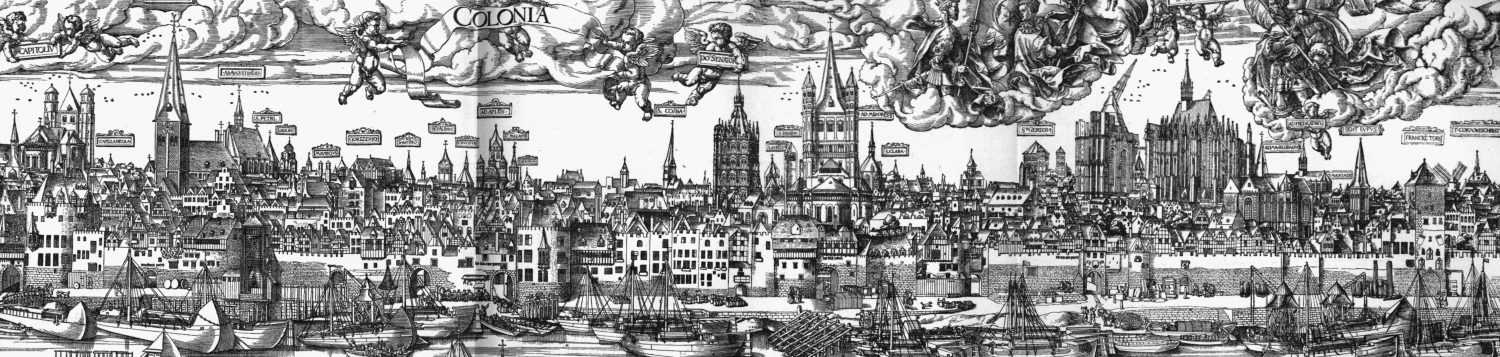
The German Throne Dispute at the beginning of the 13th century continues and Cologne is right in the middle of it.
Until 1205, the German throne dispute was a complex struggle for power and legitimacy in the Holy Roman Empire. After the death of Emperor Henry VI in 1197, a conflict broke out over the succession between the Guelphs, represented by Otto IV, and the Hohenstaufen dynasty, represented by Philip of Swabia. This dispute drew various European powers, including the Pope and the English king, into a protracted conflict characterized by shifting alliances and political intrigue. However, Cologne in particular loyally held on to power alongside the Welfs.
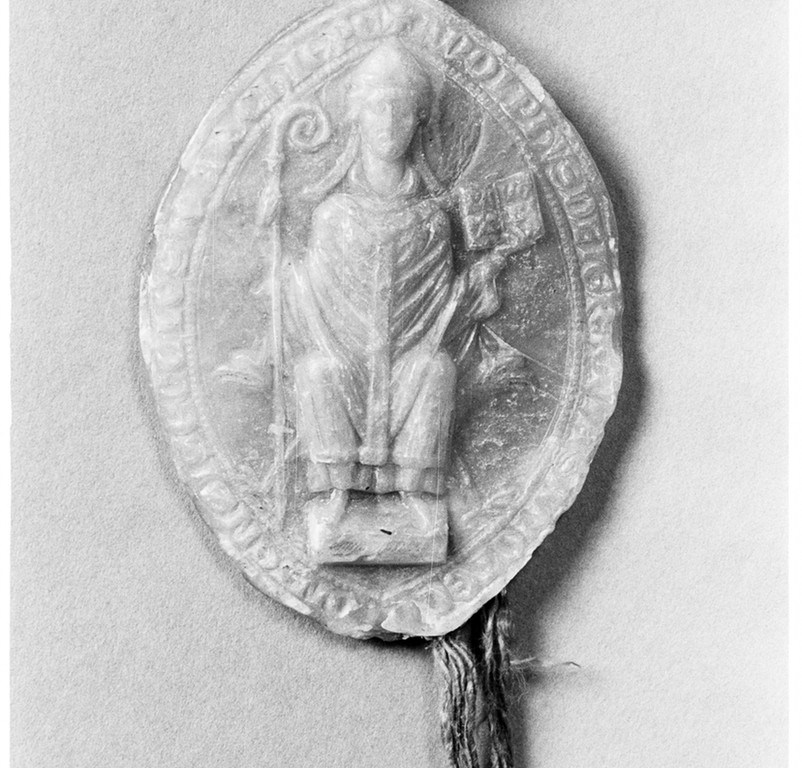
Archbishop Adolf of Altena
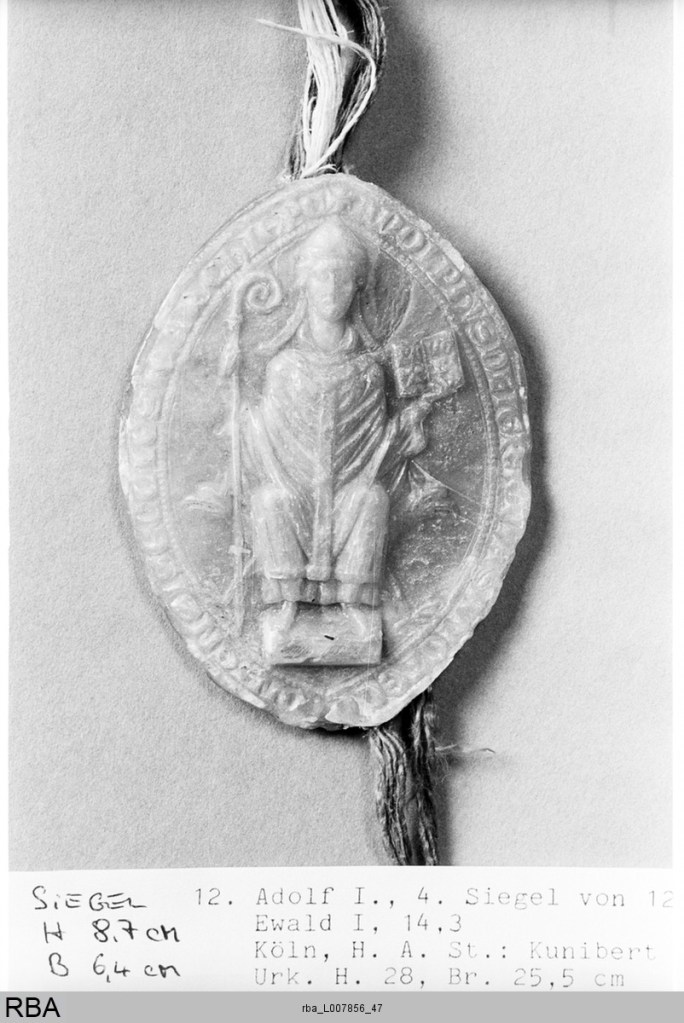
Siegel, Erzbischof Adolf I. von Altena (1193-1205, 1212-1216), 2. Siegel, an einer Urkunde von 1214, 1214, Historisches Archiv der Stadt Köln, Köln.
Pope Innocence III

Pope Innocent III, born Lotario dei Conti di Segni (1160–1216), was one of the most influential popes of the Middle Ages. He reigned from 1198 to 1216, asserting the power of the Church over European affairs, organizing the Fourth Crusade, and playing a key role in the politics of the time, including the Albigensian Crusade.
English King John Lackland
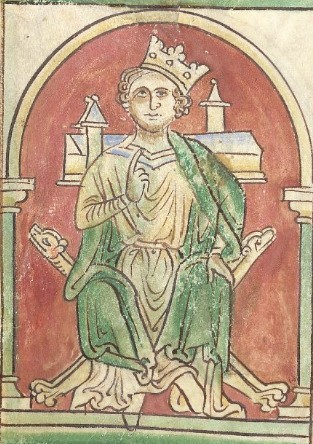
John Lackland (1166–1216), King of England, played a role in the German throne dispute. He initially supported his nephew, Otto IV, against Philipp of Swabia but shifted alliances after the Treaty of Le Goulet with France in 1200, indirectly impacting the German political landscape. When in conflict began again in 1202 between France and England, he sided again with Otto IV.
The two candidates for the throne
Hohenstaufen dynasty: Philip of Swabia
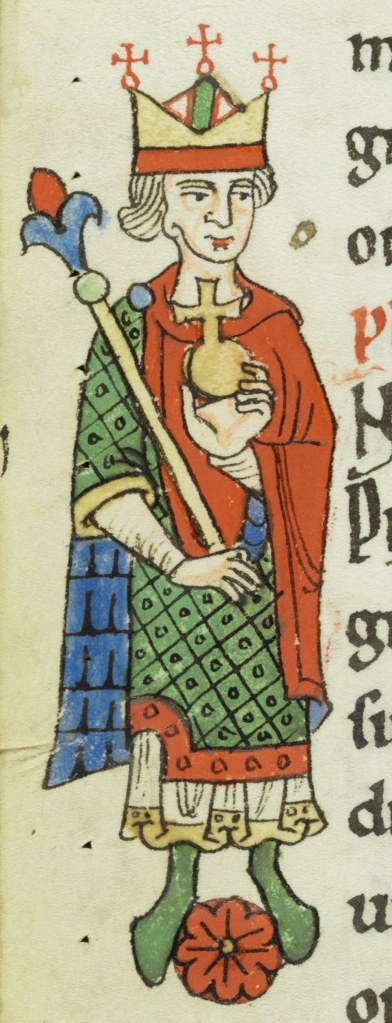
Philipp of Swabia was a member of the Hohenstaufen dynasty and King of Germany from 1198. His reign was marked by the German throne dispute with Otto IV, a key part of the broader conflict between the Welf and Hohenstaufen dynasties.
Welf dynasty: Otto IV. (of Braunschweig-Poitou)

Otto IV was a member of the Welf dynasty and Holy Roman Emperor and in dispute with Philipp of Swabia.
Don’t miss any new episode. Subscribe to this blog!
 The History of Cologne Podcast