
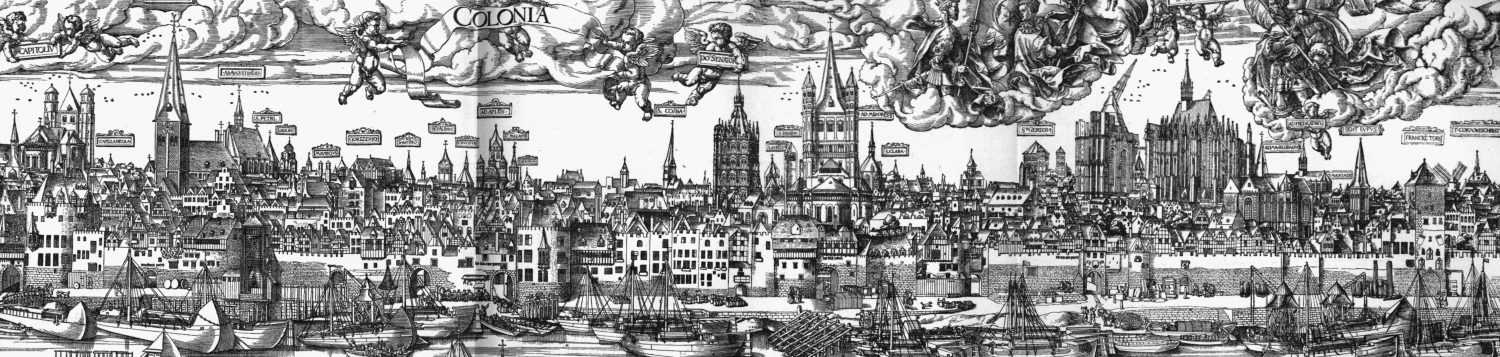
A deliberately lit fire destroys the the 500 year old Cathedral.
It was a dramatic end of Cologne’s Old Cathedral in 1248. Discover how a catastrophic fire brought down this medieval masterpiece of a building, clearing the way for the iconic Gothic structure that would redefine the city’s skyline up until today.
Podcast-Player does not appear in your E-Mail program? Click here
Pilgrims
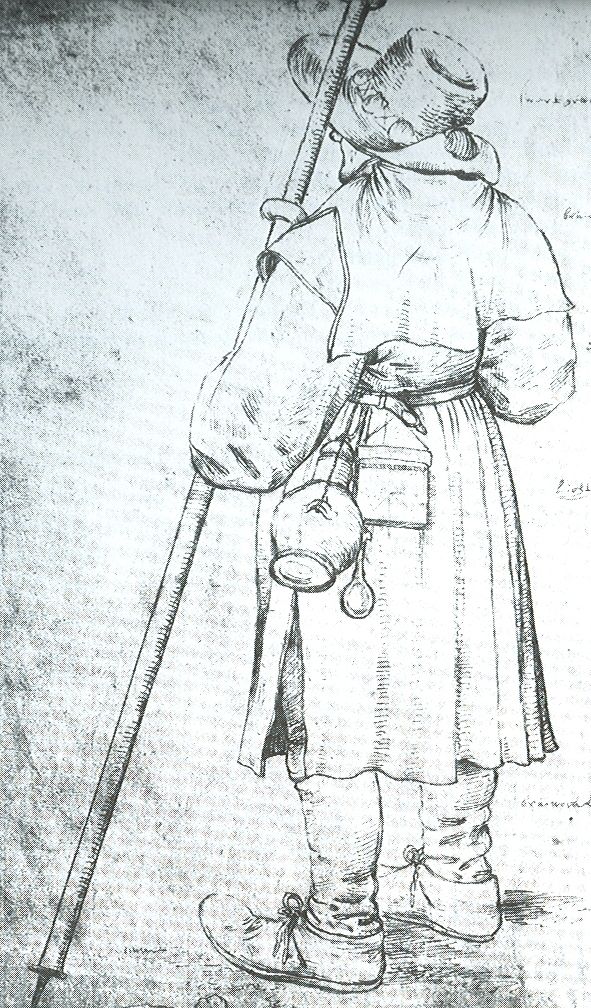
A typical pilgrim at the beginning of the 16th century. Even though our story plays three centuries earlier, this pilgrim, painted by Pieter Brueghel, has still the same outfit. A pilgrim’s hat, a pilgrim’s staff and his coat. With that he was marked as a pilgrim and it was forbidden to attack or steal from them. If that always worked, is another question.
Romanesque Architecture
What are the typical architectual features of Romanesque churches? Let’s find out!
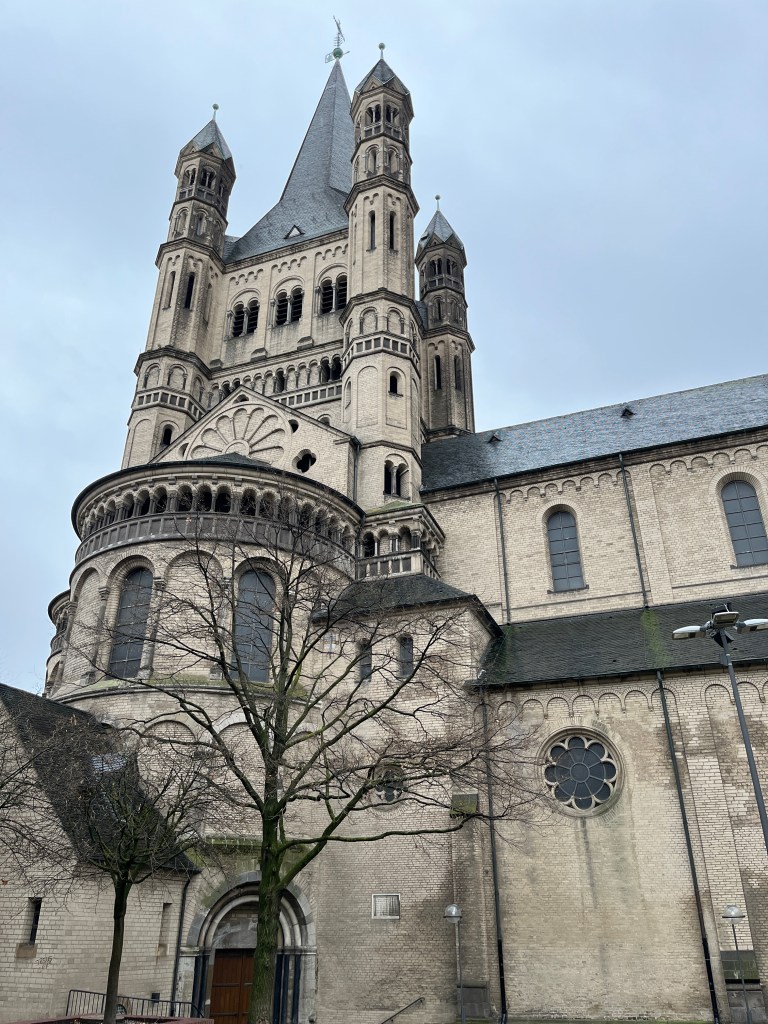
Typical Romanesque architecture at Great St. Martin: Massive outer walls, small windows with round arches. Also you can see a part of the cloverleaf choir.

Inside of the clover leaf choir of St. Apostles.

A typical main nave of a Romanesque church in St. George. Between the main nave and the side aisles in the back, the massive walls were broken by bridge arches set on round columns or or on angular pillars. St. George even has both: columns and pillars. So that one can pass between the central nave and the side nave.

St. George is one of the Romanesque churches that got its vaulted ceilings added in later times. Where once the grey pillars ended at the top, there was just a flat wooden ceiling. This style of having just a flat ceiling instead of a vaulted late Romanesque version can still be seen…
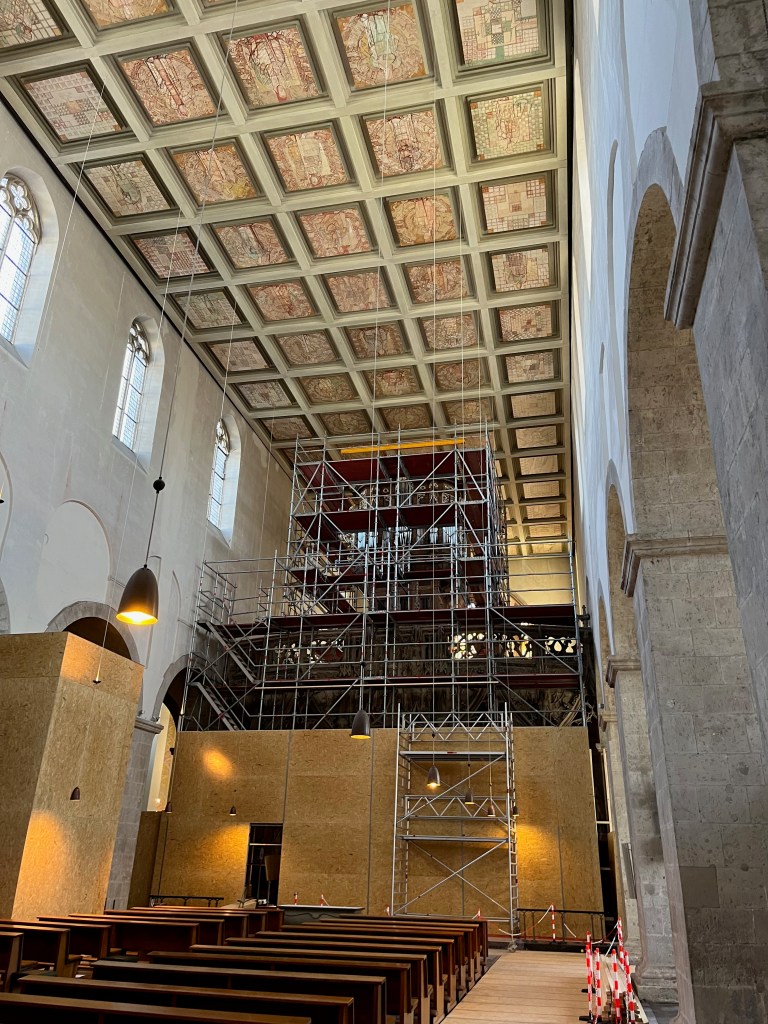
…can still be seen in St. Pantaleon where they kept the flat ceiling. Even though the later added windows with the pointed arches close to the ceiling are from the later late-medieval Gothic architectural style.
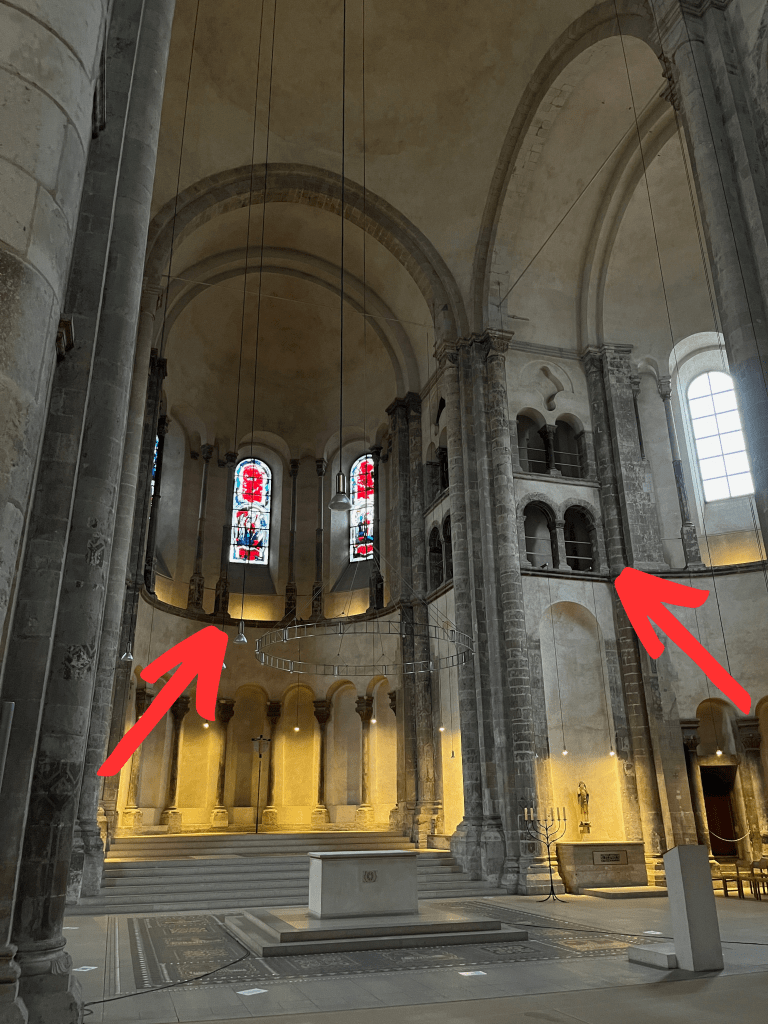
A so-called triforium in Great St. Martin. This was later also adopted from Gothic cathedrals. Anyone who has taken a guided tour of Cologne Cathedral up to the roof will also have walked along the triforium. If you think to yourself, phew, pretty tight here, it should be clear that these were originally a purely ornamental element. And not to lead groups of curious tourists along here.
The Old Cologne Cathedral
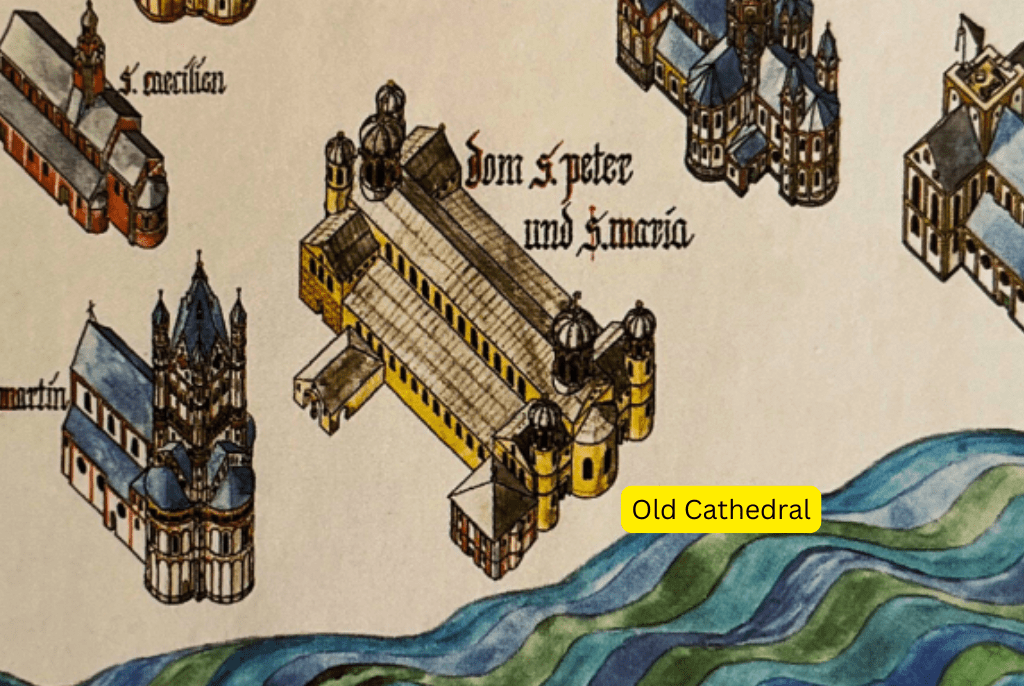
Video about the Old Cathedral (with timestamps)
4:19 minutes: The Old Cathedral that was being built in the 9th century
4:52 minutes: interior of the Old Cathedral
5:08 minutes: Hilinus Codex
5:32 minutes: total view of Old Cathedral in the 11th century. On the right you can see the chapel of the “Pfalz” (palace)
The “Hilinus Codex”
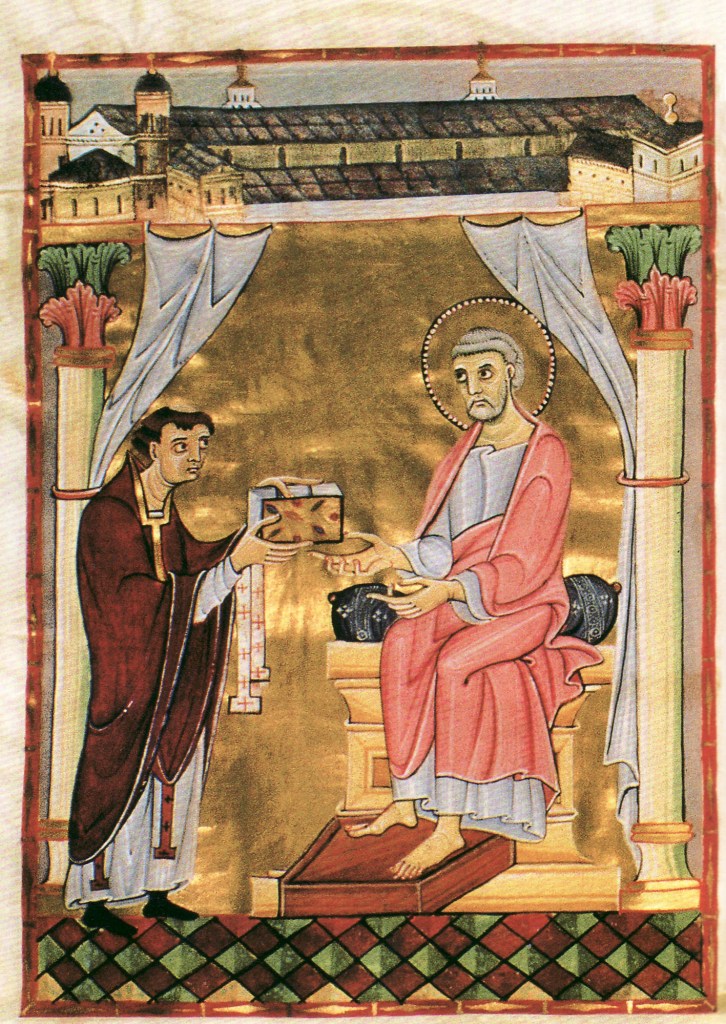
Old Cologne Cathedral on the cover of the “Hilinus Codex” and the floor tiles on the bottom. Priest Hilinus gives the codex to St. Peter, the patron of the cathedral, ca. 1025 A.D.
The “Old” Cologne Cathedral
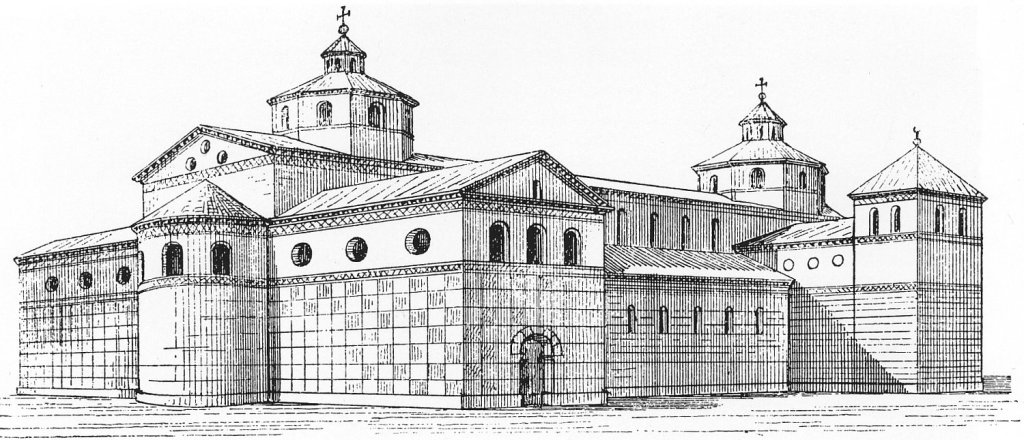
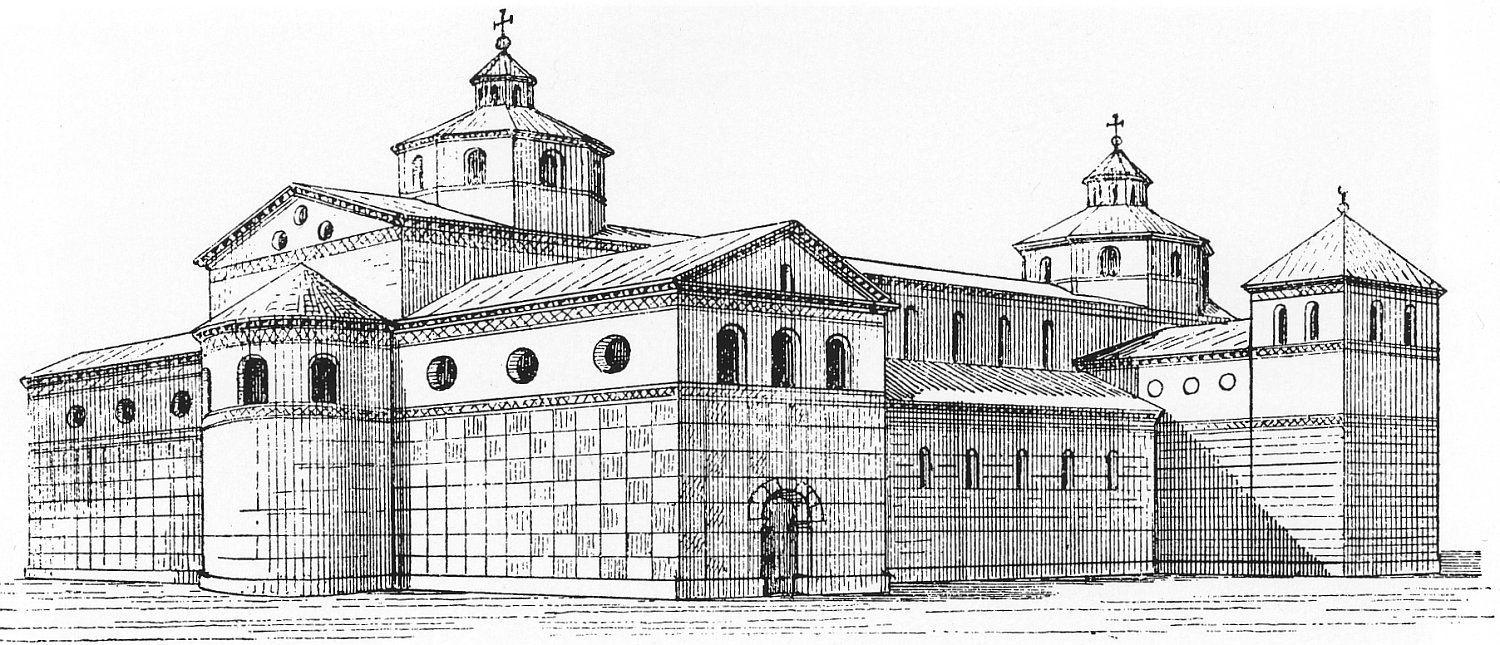
Reconstruction of the Cathedral by architect August Esswein, 19th century.
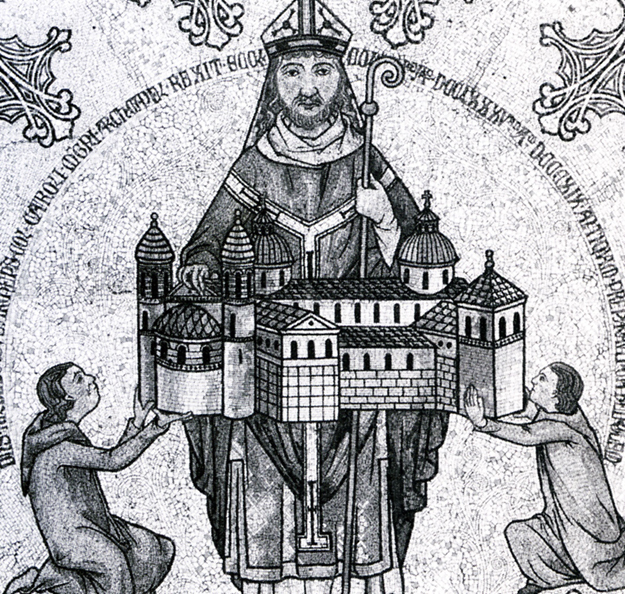
Hildebold with a model of the Old Cathedral in today’s gothic Cologne Cathedral. The mosaic was made in 1899 by Villeroy & Boch.
The remains of the Old Cathedral in the archaeological zone beneath today’s Cologne Cathedral
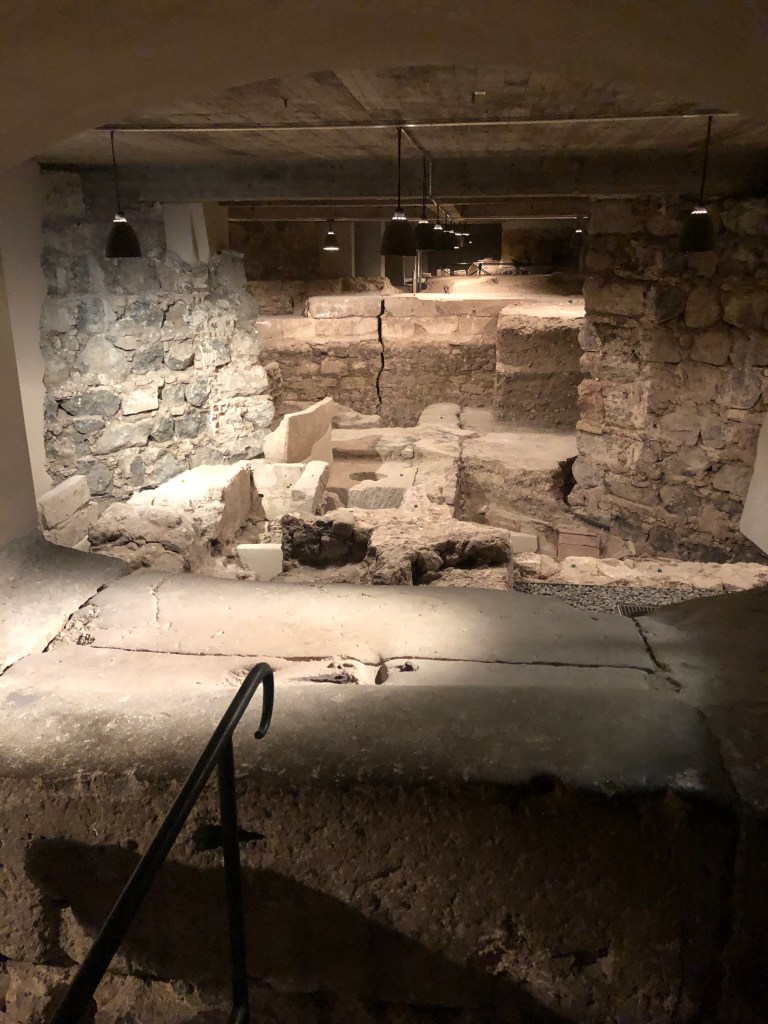
Stepstone into the Old Cathedral in the bottom of the picture. Look closely how to one side this step is worn out by centuries of people going in and out.
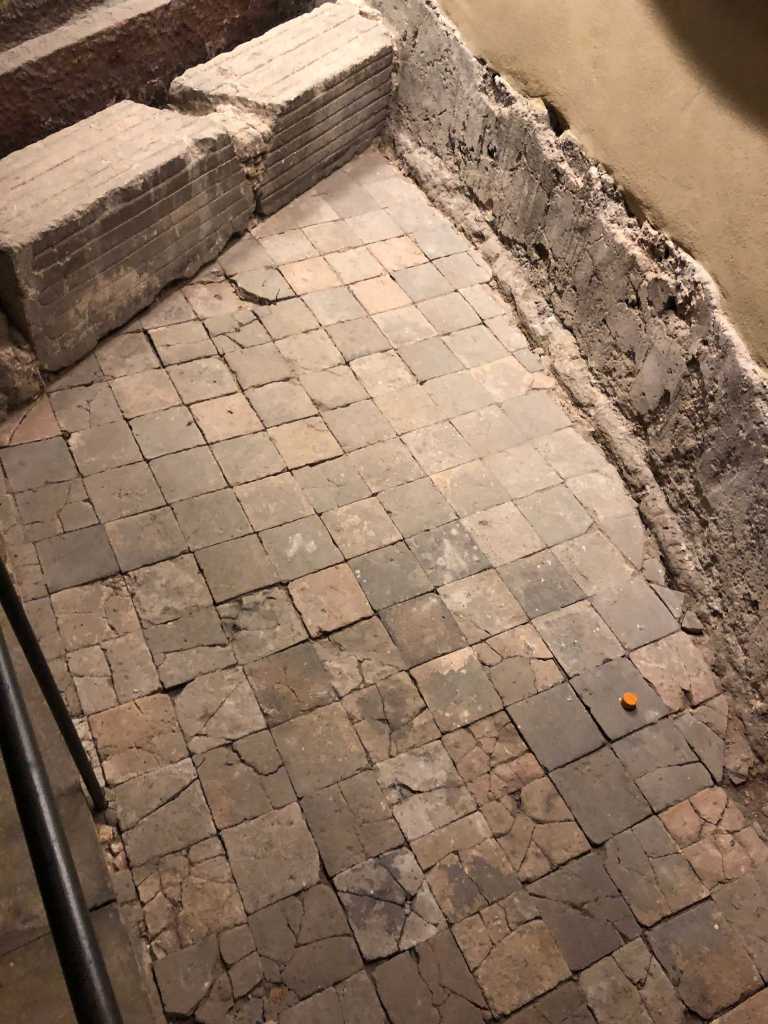
Remaining original floor tiles of the Old Cathedral. So amazing! They were not demolished because one always thought of that they could be recycled one day. But maybe they were forgotten over the course of the centuries. Lucky for us! As you can see the color wore a bit of over 1,000 years later. But it you can clearly see that they got the same color as depicted on the “Hilinus Codex.”
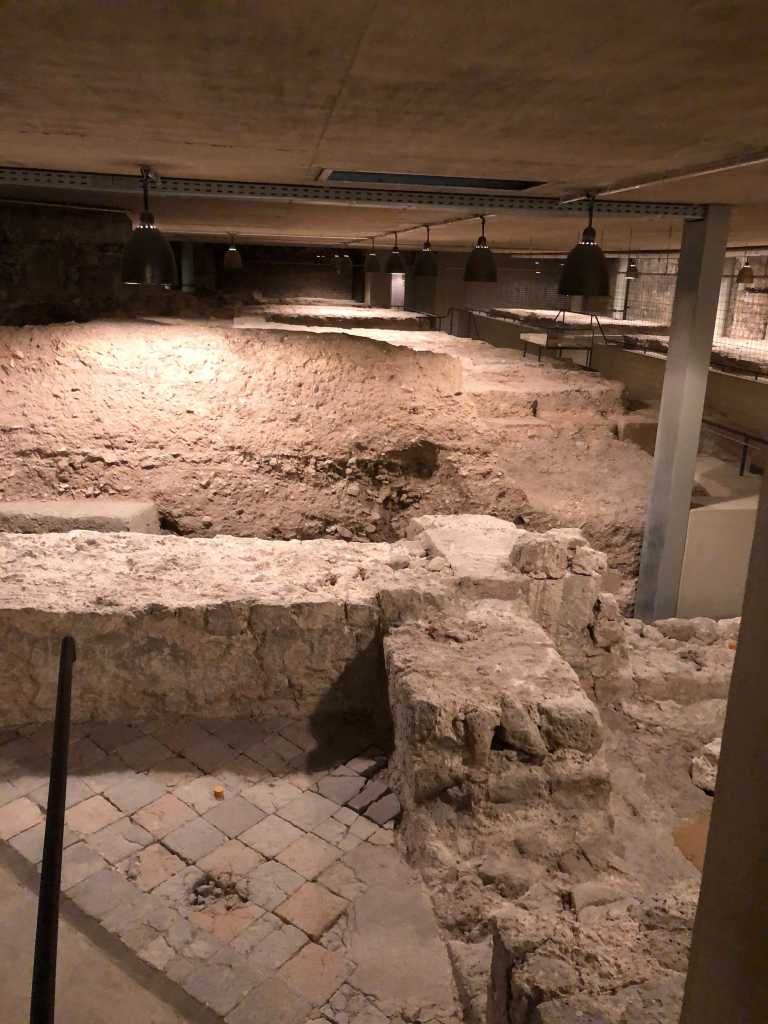
A corner of the Old Cathedral with floor tiles. In the background, illuminated by the lamps, you can see other segments of the floor of the Old Cathedral. These are the areas that look something like raised beds. So, if you walk through the Archaeological Zone, you will always have the floor at stomach or chest level.
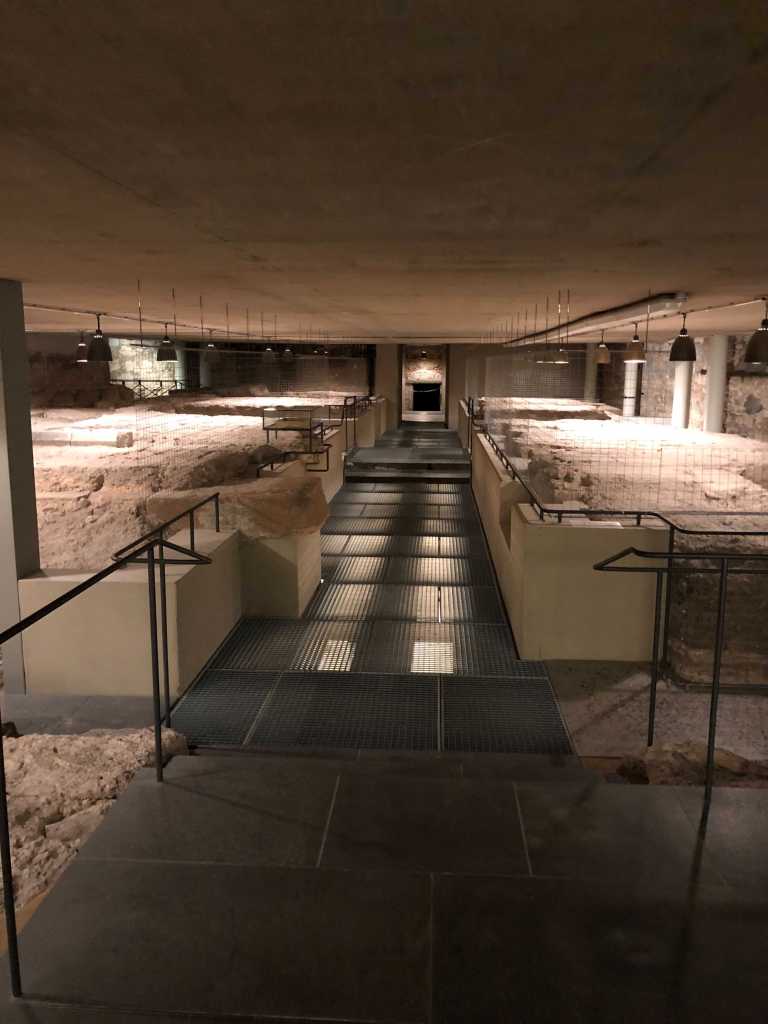
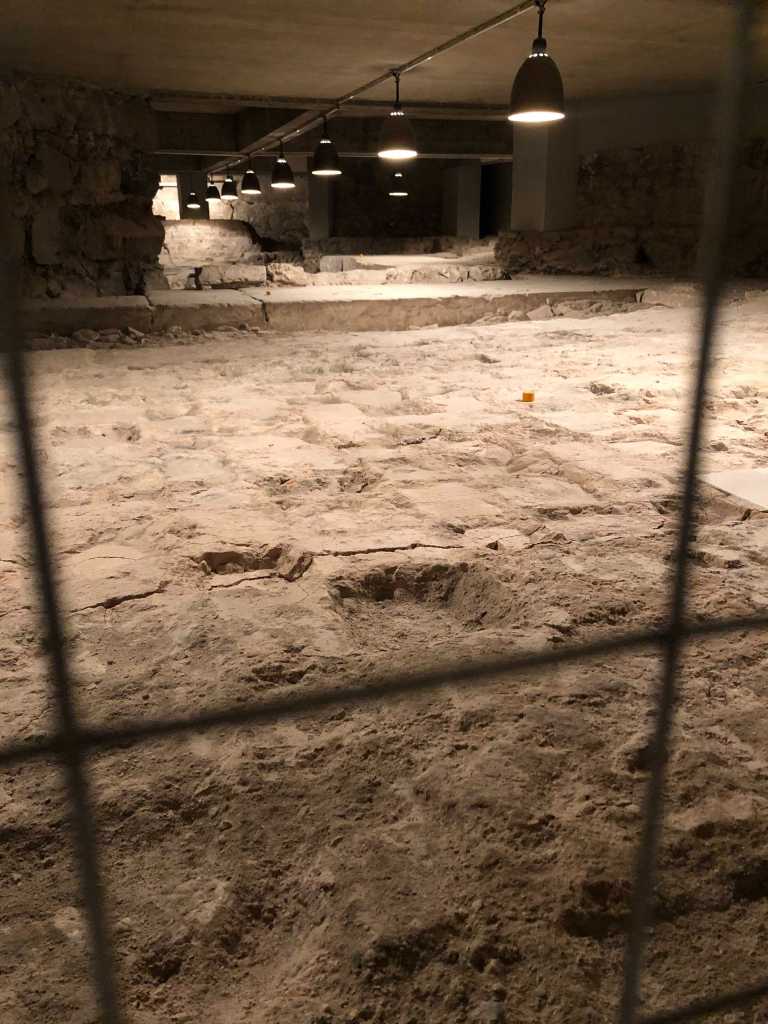
A close-up of these “raised beds.” Here the tiles were removed during the construction of what is now Cologne Cathedral. Only the screed of the floor of the Old Cathedral are still preserved here.
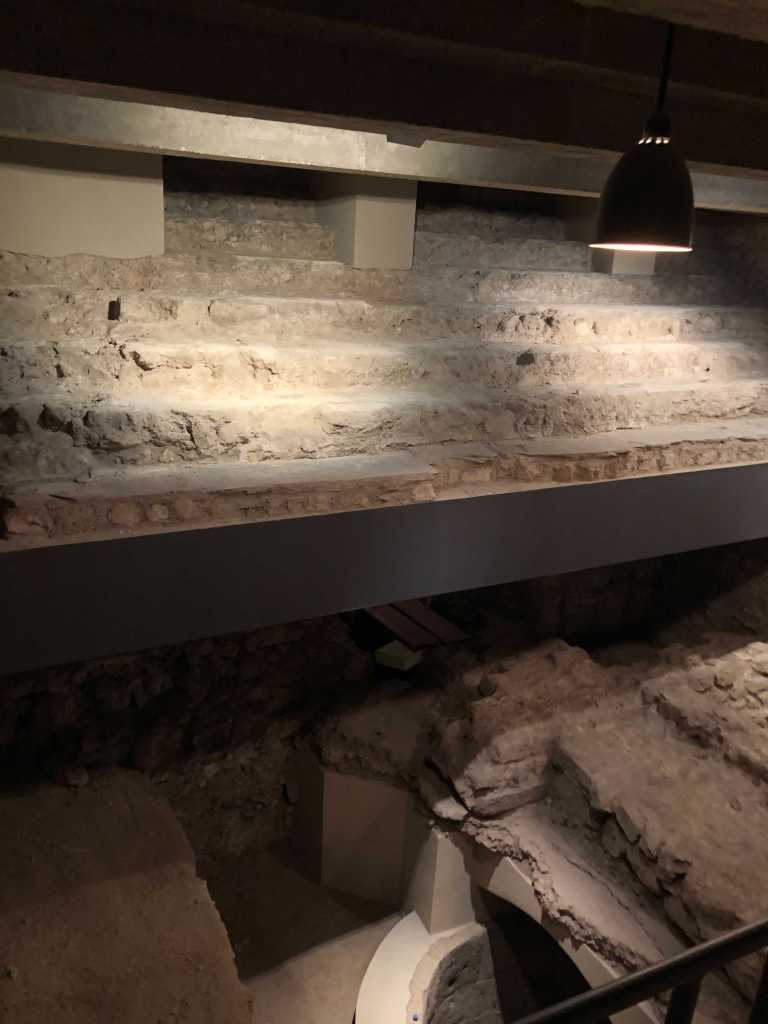
When the construction of today’s Cologne Cathedral was started, the eastern part of the Old Cathedral was demolished first. Since it was built over the foundations and foundation walls of the Old Cathedral, today’s Cologne Cathedral is higher than the surrounding terrain. In order to be able to walk back and forth on the construction site between the Old Cathedral, which was still partially preserved at that time, and the new cathedral, this staircase served for some time.
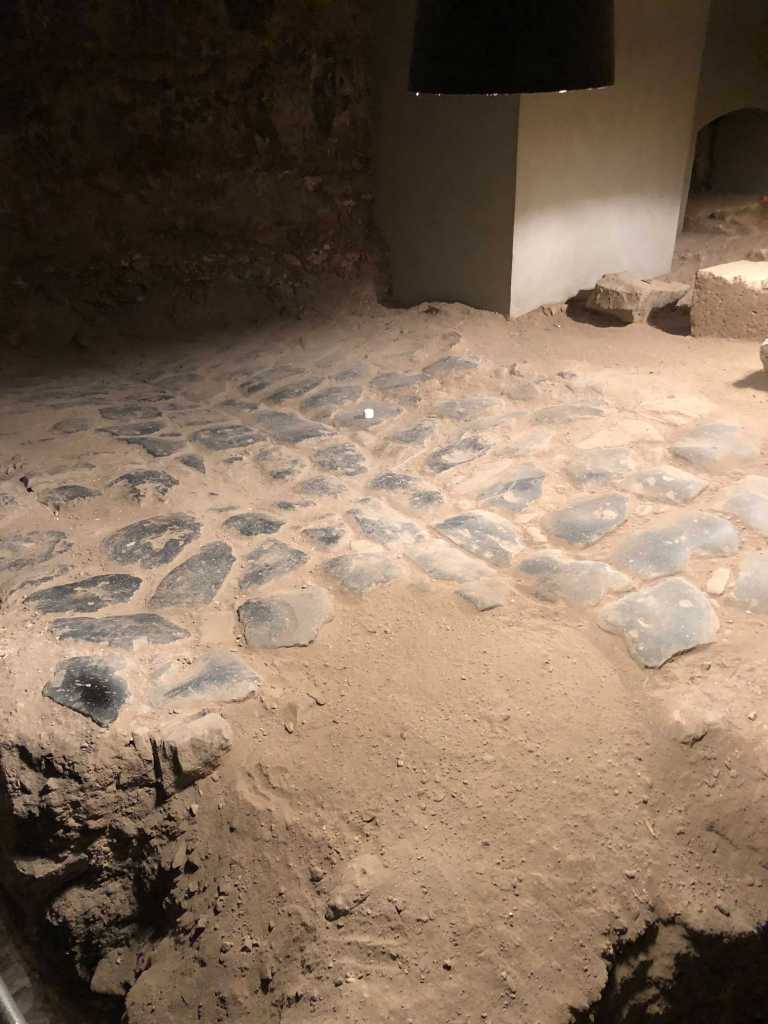
To get building materials to the site, they even created their own roads right into the construction site. These are also still preserved under today’s Cologne Cathedral.
Gothic Architecture
Pointed Arch
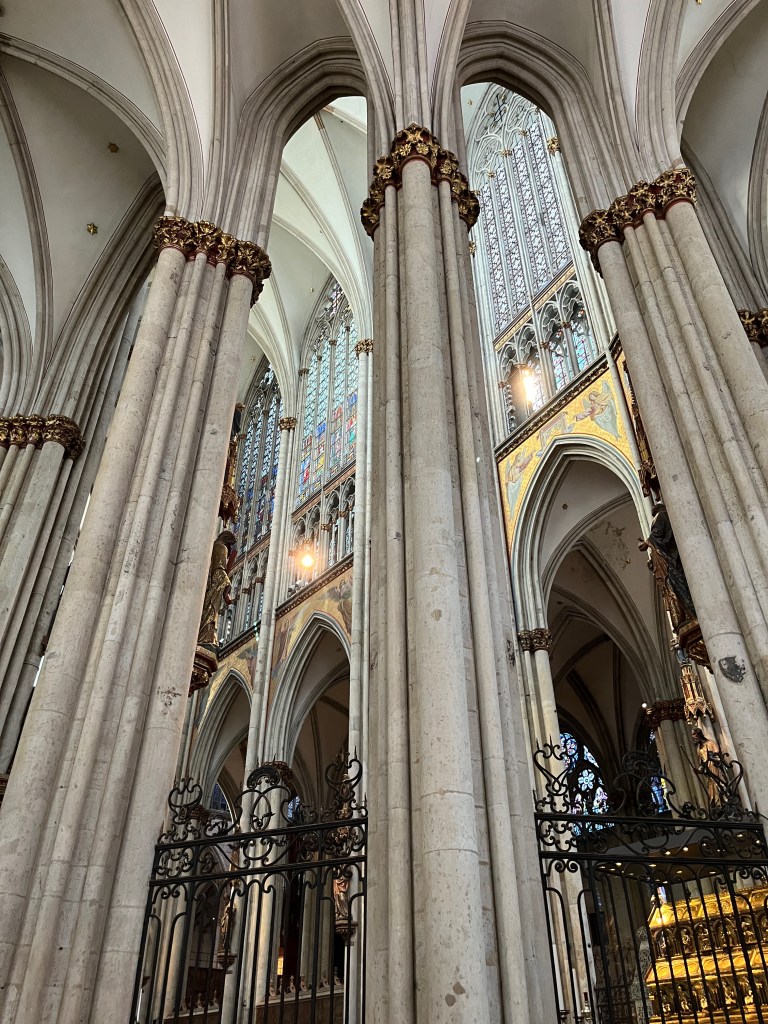
With pointed arches like these one can build with the Gothic style way higher buildings.
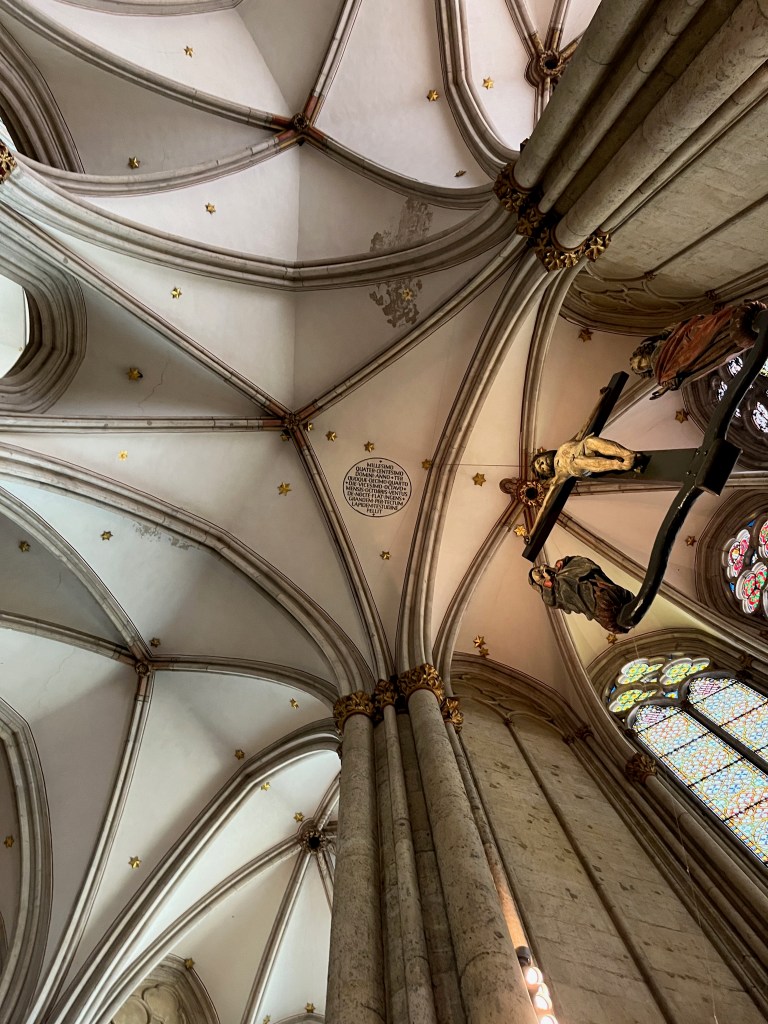
Vaulted arches like these help to distribute the enorm weight of the ceiling equally between pillars and columns.
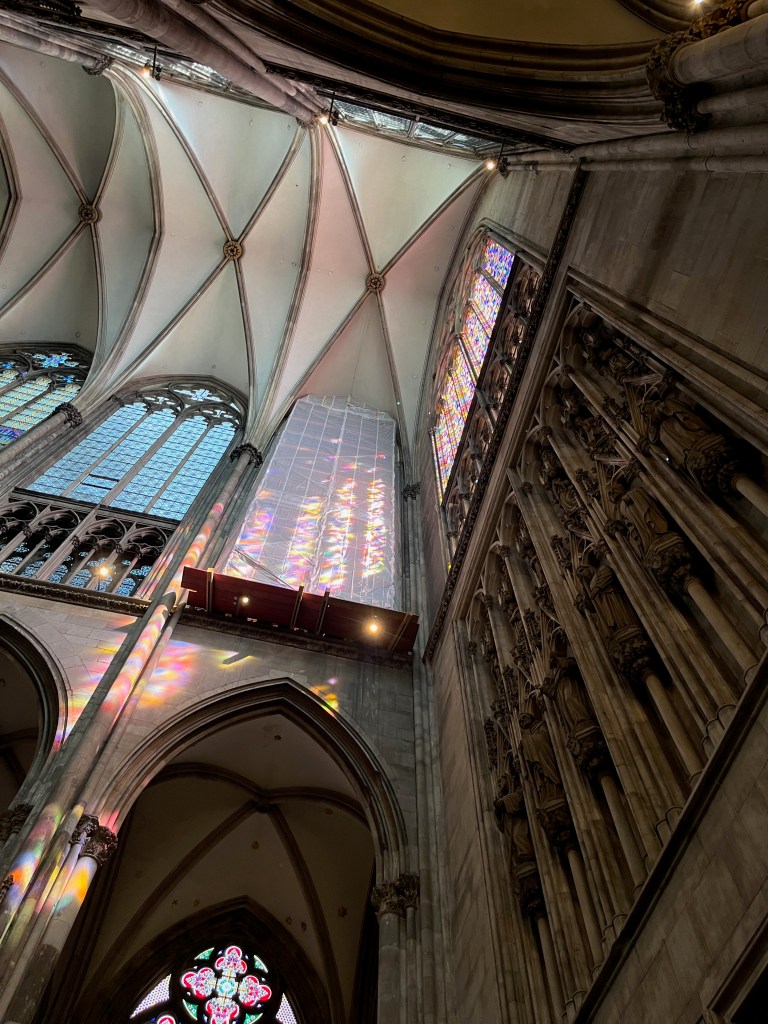
In line with the words of Jesus from the Bible: “I am the light of the world”, Gothic architecture strives to let as much light as possible into the interior. A departure from Romanesque architecture, which only allowed small, narrow windows because of statics. The relief of the outer walls through pillars, columns and buttresses to the outside made it possible to build large windows into the outer wall.
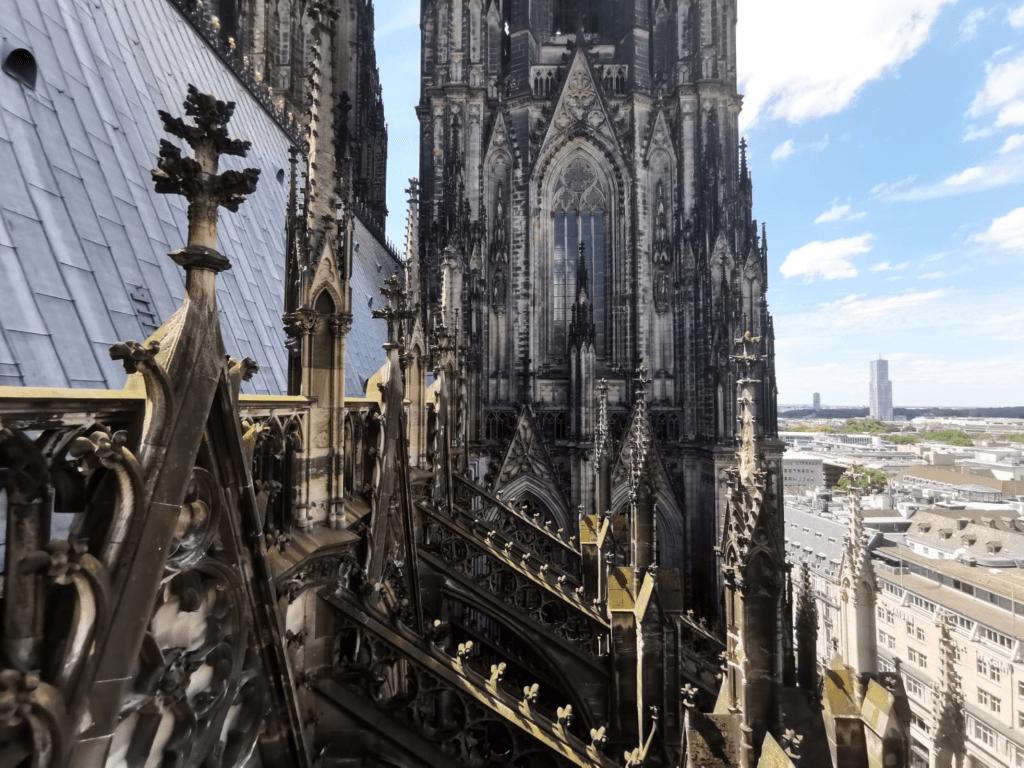
Buttresses like these made of stone shifted the pressure and weight of the walls and ceilings to the outside. The Gothic building thus distributed the weight in a skeletal manner over many areas. This made it possible to build much higher and install large glass windows.
Don’t miss any new episode!
 The History of Cologne Podcast