
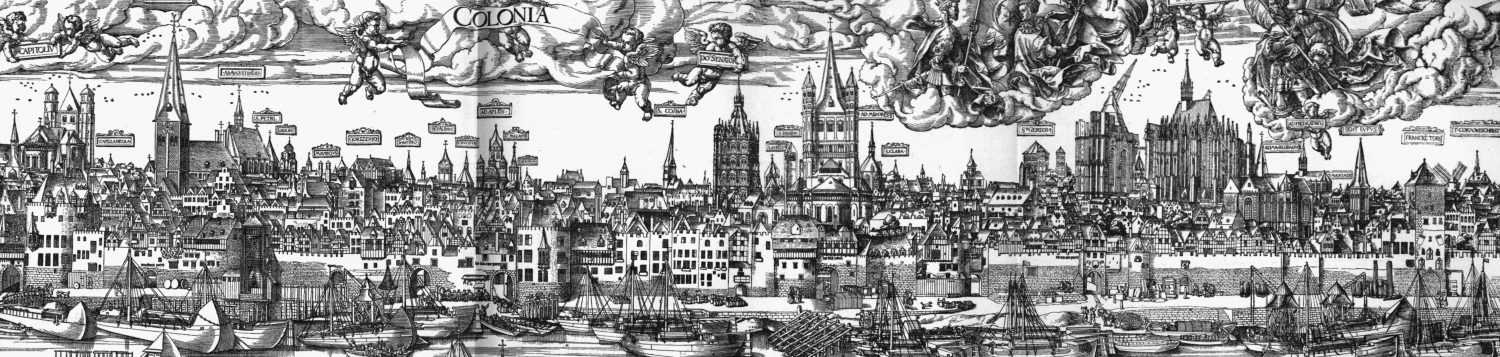

In 1257, the city of Cologne becomes the stage for a dramatic clash between its powerful Erzbischof, Konrad von Hochstaden, and the influential Cologne Kleingedank family. What begins as a calculated act of revenge soon spirals into a citywide conflict, testing the fragile balance of power between the city ruler, the archbishop, and the citizens of Cologne.
Konrad von Hochstaden
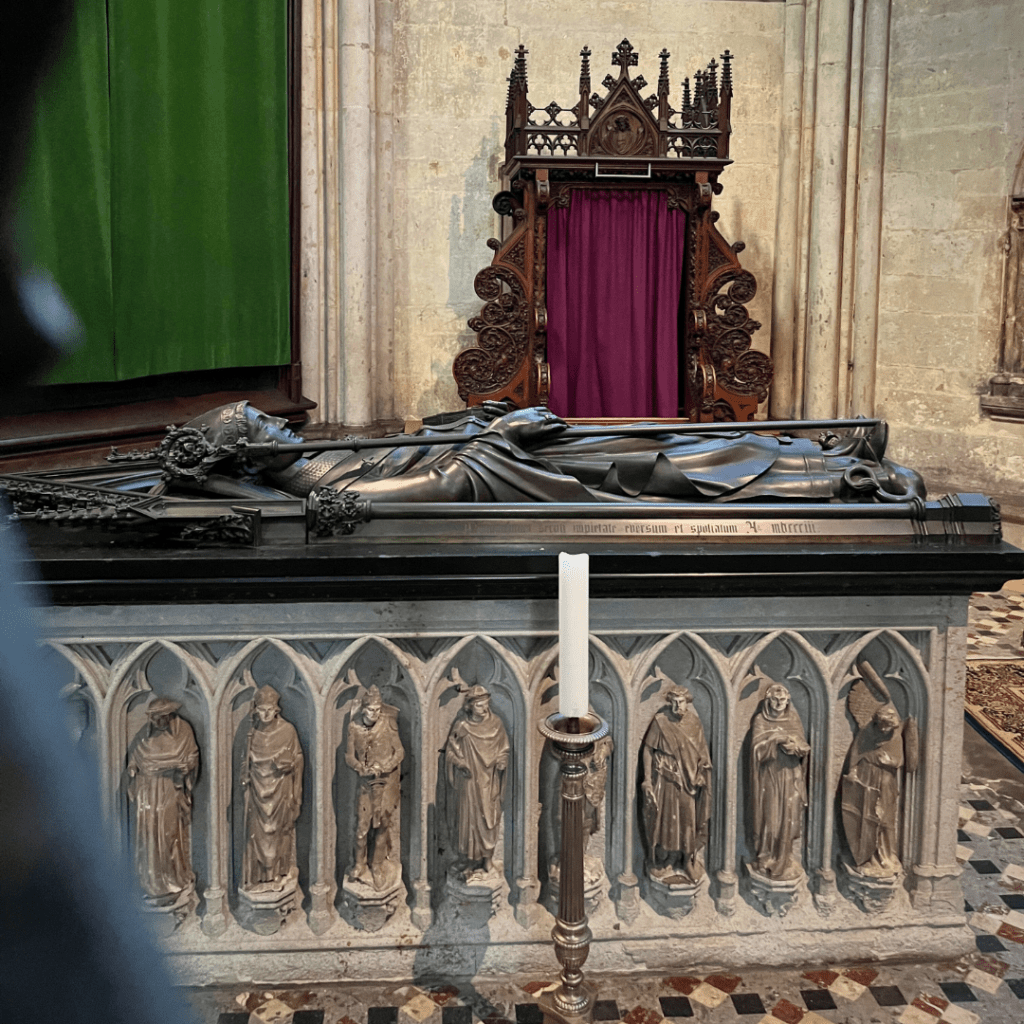
Figure of Konrad von Hochstaden at his grave in Cologne Cathedral
Konrad von Hochstaden (1205–1261) was not only the Archbishop of Cologne but also the city’s worldly ruler, wielding significant political and judicial authority. As Stadtherr (lord of the city), he controlled Cologne’s administration, oversaw justice, and had the power to impose taxes and resolve disputes. His reign was marked by constant struggles to maintain dominance over the increasingly self-assertive Bürgerschaft (citizenry), which sought greater autonomy.
Konrad’s role as a worldly ruler brought him into direct conflict with Cologne’s elite families and the rising power of the city council. The events leading to the Great Arbitration of 1258 highlight his determination to enforce his authority while navigating the complex interplay of feudal and urban politics. Though ultimately unable to curb the city’s growing independence, Konrad’s tenure solidified the dual role of the Erzbischof as both spiritual and temporal leader in medieval Cologne for the time being.
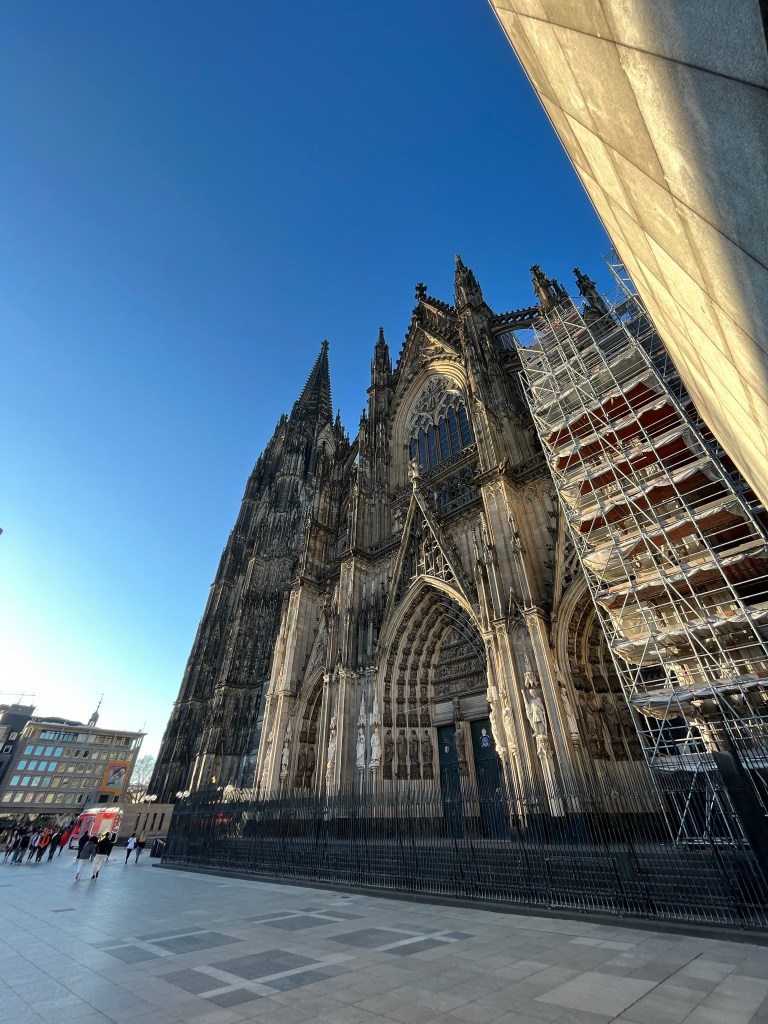
Where the conflict begins: Square in front of Cologne Cathedral
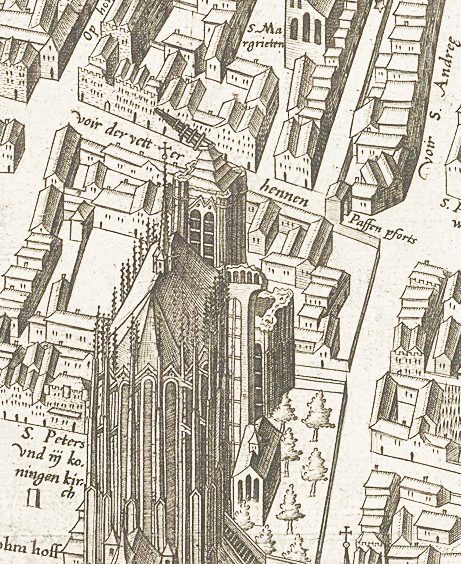
Next to the choir, at the bottom left, you can see the word “hoff”. This is the cathedral court, where the archbishop usually held court as a judge.
The conflict in Cologne in 1257 began with a personal feud between the influential Kleingedank family and a relative of Erzbischof Konrad von Hochstaden. Hermann Kleingedank was captured by a member of Konrad’s extended family during a debt-collection raid near the Moselle river. In retaliation, the Kleingedanks launched a public attack on Heinrich von der Neuerburg, another relative of Konrad, during a court session on the Cathedral Court.
This act of revenge was seen by Konrad as a direct affront to his authority as city lord. The situation escalated quickly when the rich citizens of Cologne sided with the Kleingedanks, forcing Konrad to flee the city and plan a military response, which ignited a broader power struggle between the Erzbischof and the Bürgerschaft.
The Cathedral Court nowadays.

Don’t worry, when I took the pictures the whole square was a construction site. 😀
The Great Arbitration of 1258
The Great Arbitration of 1258, known as the Großer Schied, was a pivotal moment in Cologne’s medieval history, resolving a bitter conflict between Erzbischof Konrad von Hochstaden and the city’s powerful Bürgerschaft (citizenship). Sparked by a feud with the influential Kleingedank family, the dispute escalated into a siege and citywide unrest.
The arbitration, led by the scholar Albertus Magnus and other prominent figures, balanced the Erzbischof’s rights as Cologne’s lord with the citizens’ demands for autonomy. While Konrad retained his symbolic authority, the city’s institutions—like the council and judicial bodies—were recognized as essential for self-governance. The arbitration marked a crucial step toward Cologne’s eventual status as a free city, though it left loopholes that kept tensions alive.
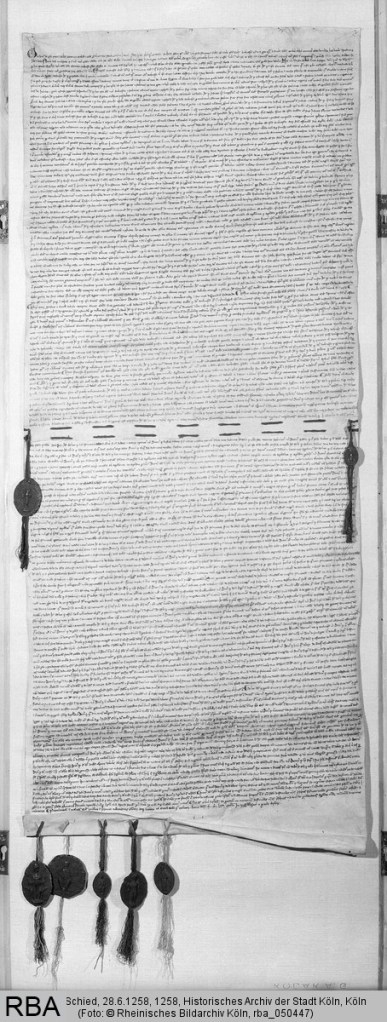
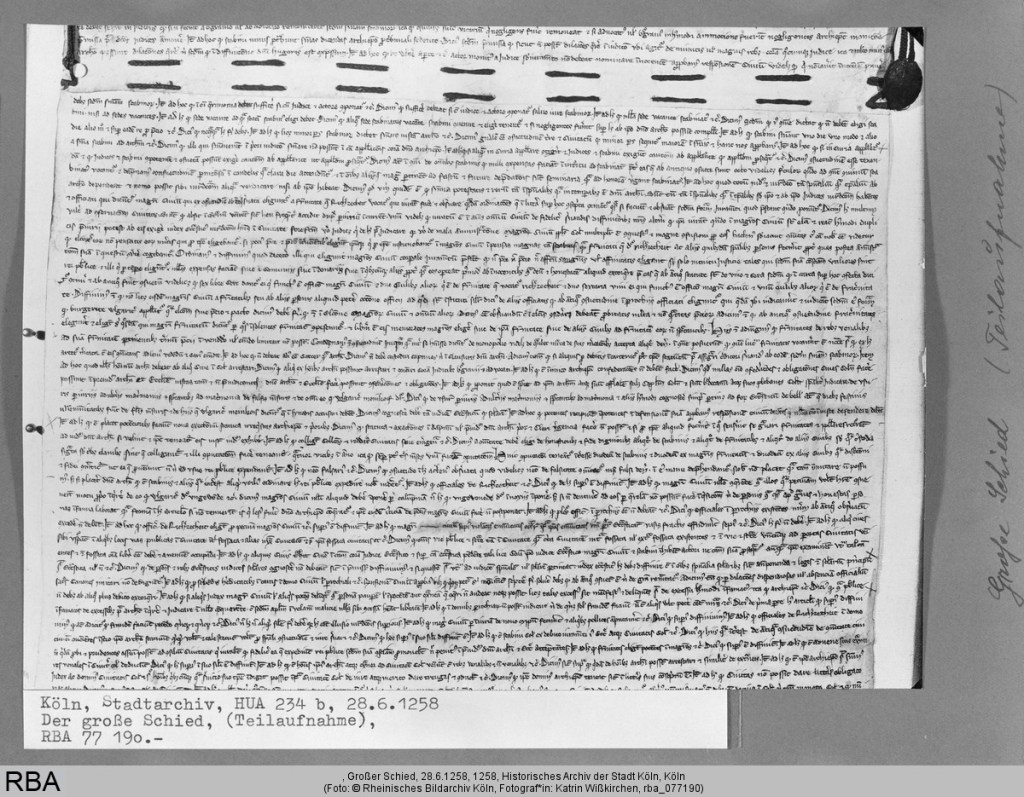
(c) Großer Schied, 28.6.1258, 1258, Historisches Archiv der Stadt Köln, Köln.
 The History of Cologne Podcast