
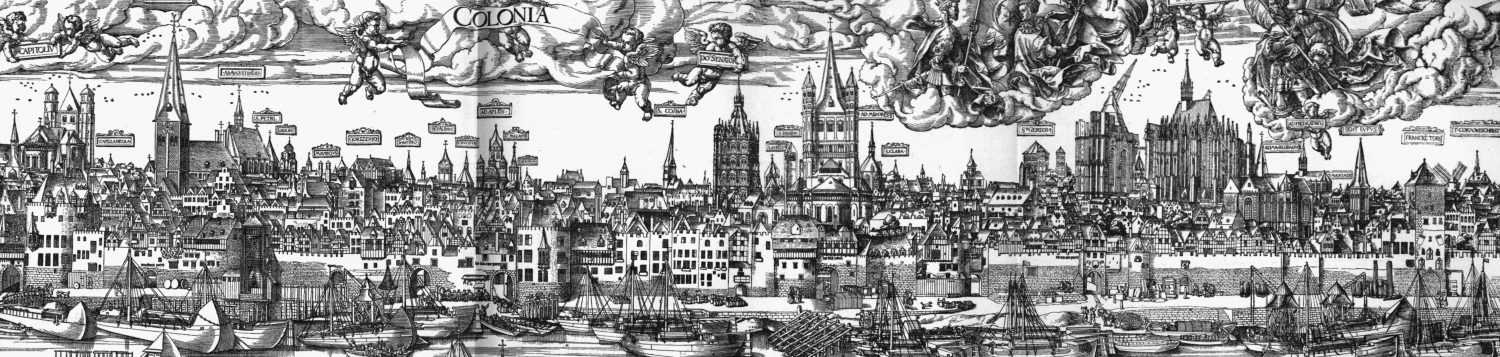

In 1259, Cologne stood at a crossroads of power and trade. Amid deep political unrest and shifting alliances, a crucial privilege—the Staple Right—was granted, setting the stage for the city’s rise as a dominant economic force. But this wasn’t just about commerce; it was a high-stakes battle between the ruling archbishop, wealthy patricians, and the city’s discontented citizens. How did this privilege shape Cologne’s destiny for centuries to come?
Konrad von Hochstaden

Figure of Konrad von Hochstaden at his grave in Cologne Cathedral
In 1259, amidst ongoing tensions with Cologne’s patrician elite, Konrad leveraged widespread dissatisfaction among the city’s lower and middle classes to dismantle the existing power structure. He formed an alliance with craftsmen, small merchants, and guild leaders, ultimately sidelining the ruling Richerzeche (the brotherhood of wealthy families). As part of his sweeping reforms, Konrad granted Cologne the Stapelrecht (Staple Right)—a privilege that forced passing merchants to unload and trade their goods in the city, enriching Cologne’s economy for centuries.
Through a mix of political cunning and economic foresight, Konrad von Hochstaden secured his place as one of the most influential figures in Cologne’s medieval history. His actions not only strengthened the archbishop’s control but also laid the foundation for Cologne’s dominance in regional trade.
Oberländer/Dutchmen Ships
Oberländer ships were flat-bottomed cargo vessels specifically designed for navigating the upper Rhine, where the river was shallower and had stronger currents compared to the lower sections. Unlike the larger and deeper-hulled Dutchmen ship/Niederländer ships, which operated in the broader and deeper waters to the north, Oberländer ships had a shallower draft, allowing them to travel safely through the trickier stretches of the river south of Cologne.

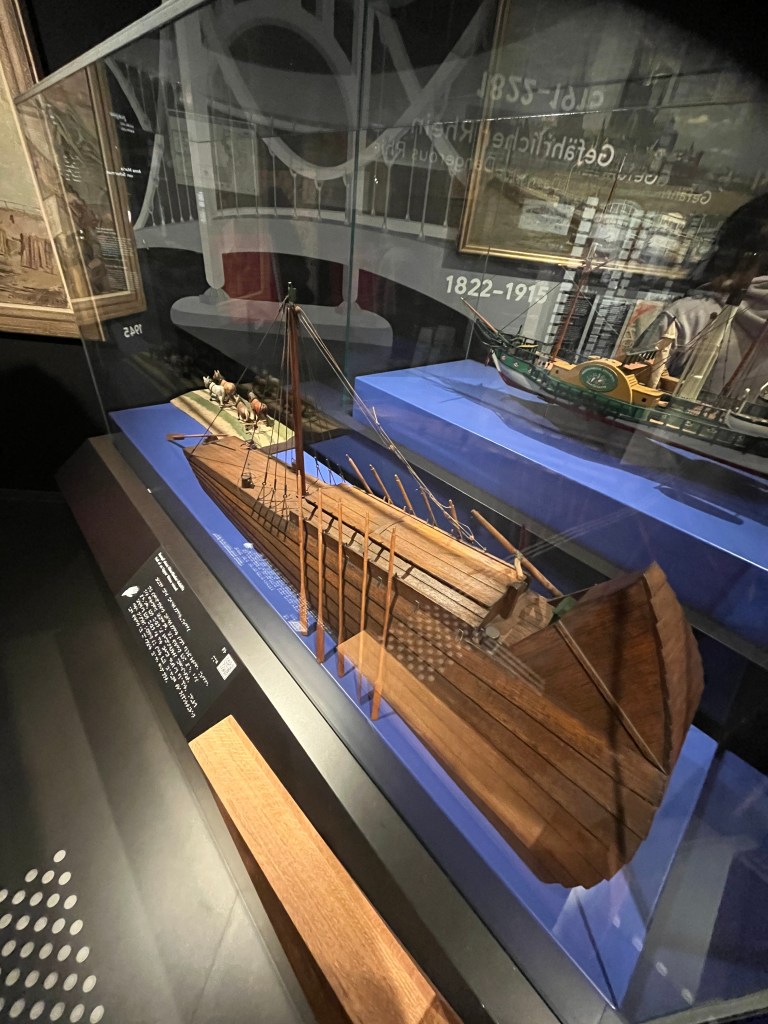
Model of an Oberländer ship in the History Museum of Cologne
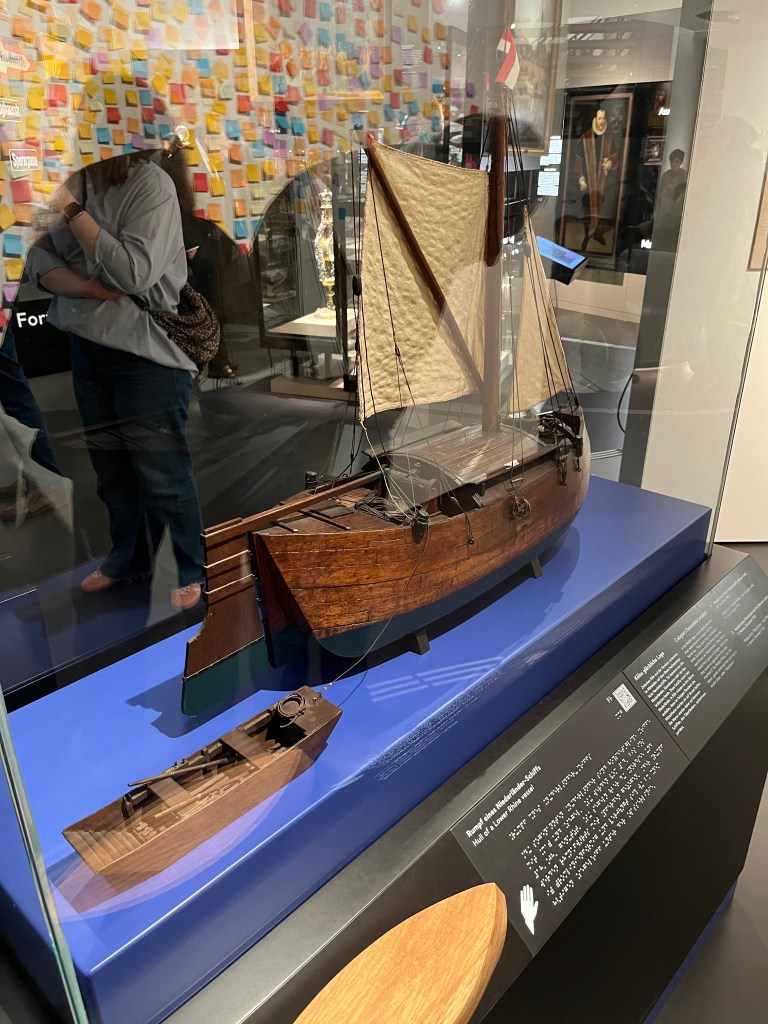
Dutchmen/Niederländer ships were large, deep-hulled cargo vessels designed for transporting goods along the lower Rhine and beyond, into the North Sea trade networks. They were more robust and spacious than their counterparts, the Oberländer ships, which were better suited for the shallower, more treacherous upper Rhine.
These vessels were particularly common in the Low Countries (modern-day Netherlands and Belgium), which is where they got their name. They were built for deep-water navigation, making them ideal for transporting heavy goods between the cities of Flanders, the Rhineland, and the Hanseatic ports of Northern Europe.
The Privilege of Staple Right 1259

Source: Historisches Archiv der Stadt Köln mit Rheinischem Bildarchiv.
The Privilege of Staple in Cologne (1259)
In 1259, Cologne’s Archbishop Konrad von Hochstaden granted the city the official Stapelrecht (Staple Right), a powerful economic privilege that shaped its future for centuries. This right required all merchants traveling through Cologne by land or along the Rhine River to stop, unload, and offer their goods for sale to Cologne’s residents before continuing their journey.
Previously, Cologne had unofficially enforced this practice, but Konrad’s decree legitimized it and ensured strict enforcement. The privilege greatly benefited Cologne’s merchants, as they gained a monopoly over trade by acting as middlemen. It also boosted the local economy, as foreign traders had to pay taxes, fees, and conduct business in the city, bringing wealth to a wide range of professions, from craftsmen to tavern owners.
The Staple Right helped solidify Cologne’s status as a major trade hub in medieval Europe, allowing it to accumulate vast wealth and political influence. It remained in effect for centuries, making Cologne one of the most economically dominant cities in the Holy Roman Empire.
Mosaic of Konrad von Hochstaden in Cologne Cathedral
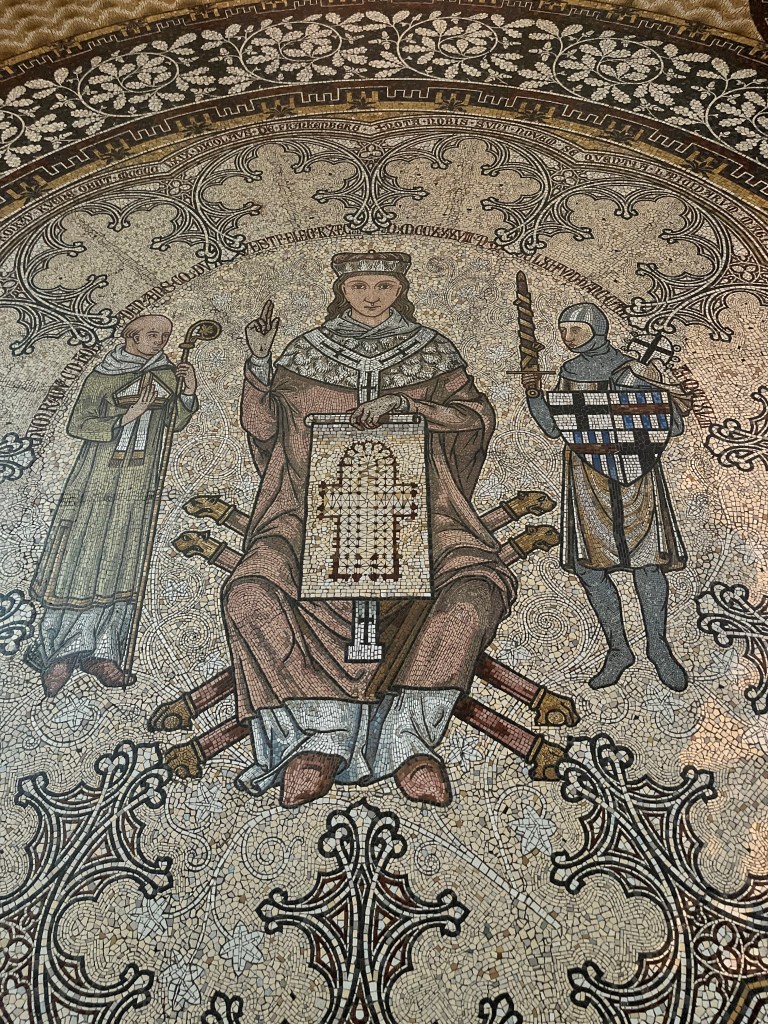
The mosaic of Konrad von Hochstaden in Cologne Cathedral is a 19th-century artwork honoring the Archbishop of Cologne (1238–1261). Located near the Axial Chapel, it depicts Konrad holding a floor plan of the cathedral, symbolizing his crucial role in laying the foundation stone for the current Gothic structure in 1248.
The mosaic is part of a larger decorative program celebrating important historical figures connected to Cologne’s history. Konrad’s legacy, marked by his political reforms, economic influence (such as granting the Staple Right in 1259), and contributions to the cathedral’s construction, is immortalized in this stunning floor artwork, reminding visitors of his lasting impact on the city.
Statue of Konrad von Hochstaden at the Historical Town Hall Tower of Cologne

The statue of Konrad von Hochstaden, located on Cologne’s Town Hall Tower, is part of a collection of sculptures honoring significant figures in the city’s history. Installed in 1991, it portrays the 13th-century Archbishop of Cologne, known for his political influence, economic reforms (including granting the Stapelrecht in 1259), and his role in laying the foundation stone of Cologne Cathedral in 1248.
However, what makes this statue particularly notorious is its plinth, which features a grotesque figure performing autofellatio. This peculiar element is purely coincidental—the plinth originally supported a medieval statue of a saint, which was lost during World War II. After the war, the remaining plinth was repurposed for new statues, including that of Konrad. While unintentional, the juxtaposition has led to humorous interpretations, making it one of the more infamous and discussed sculptural details in Cologne.
Don’t miss any new episode!
 The History of Cologne Podcast