
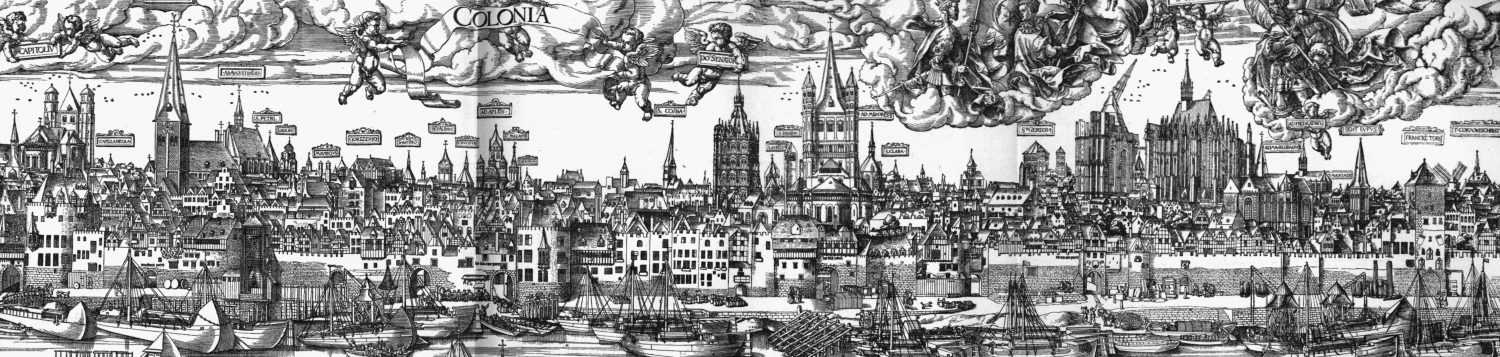
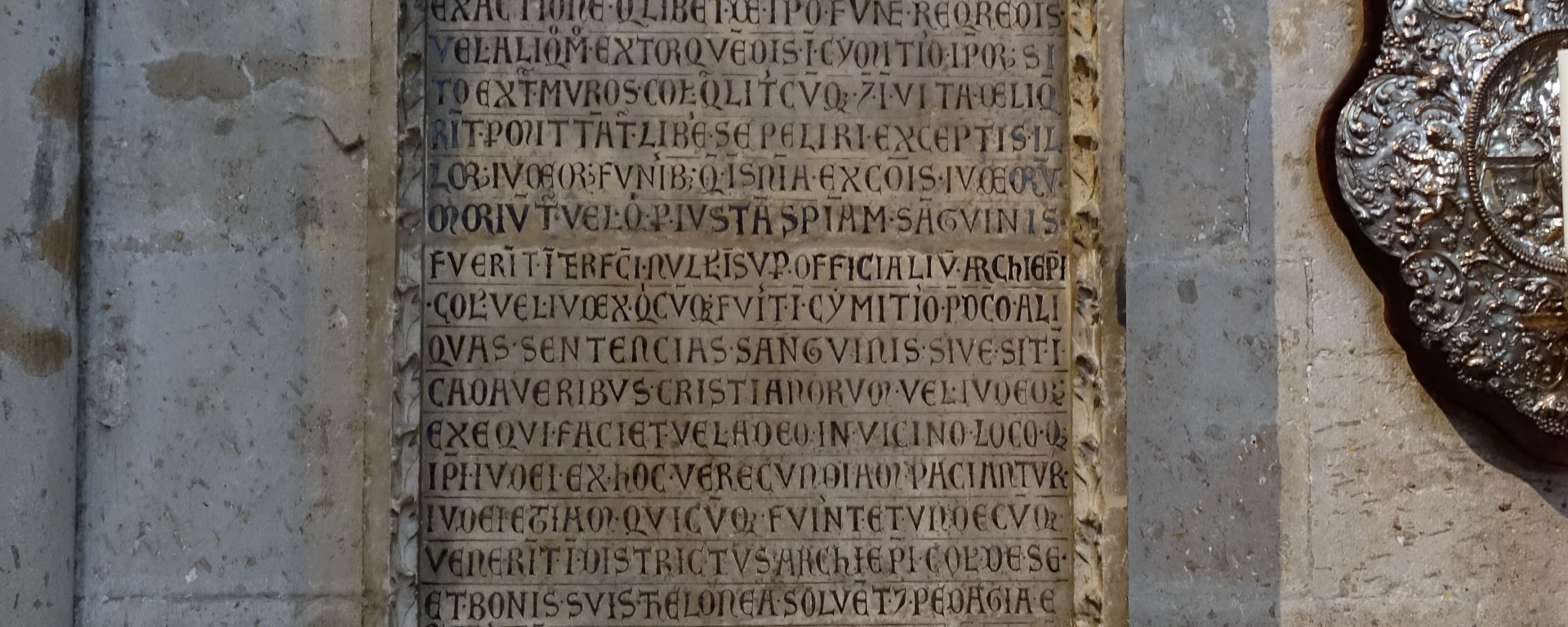
A growing Jewish community, an archbishop who claimed to protect them, and a city caught in a power struggle. A medieval document, not written on parchment, but carved in stone, still stands in Cologne Cathedral today. It granted rights—but also exposed a dangerous reality for the city’s Jewish population.
Older Bible Window
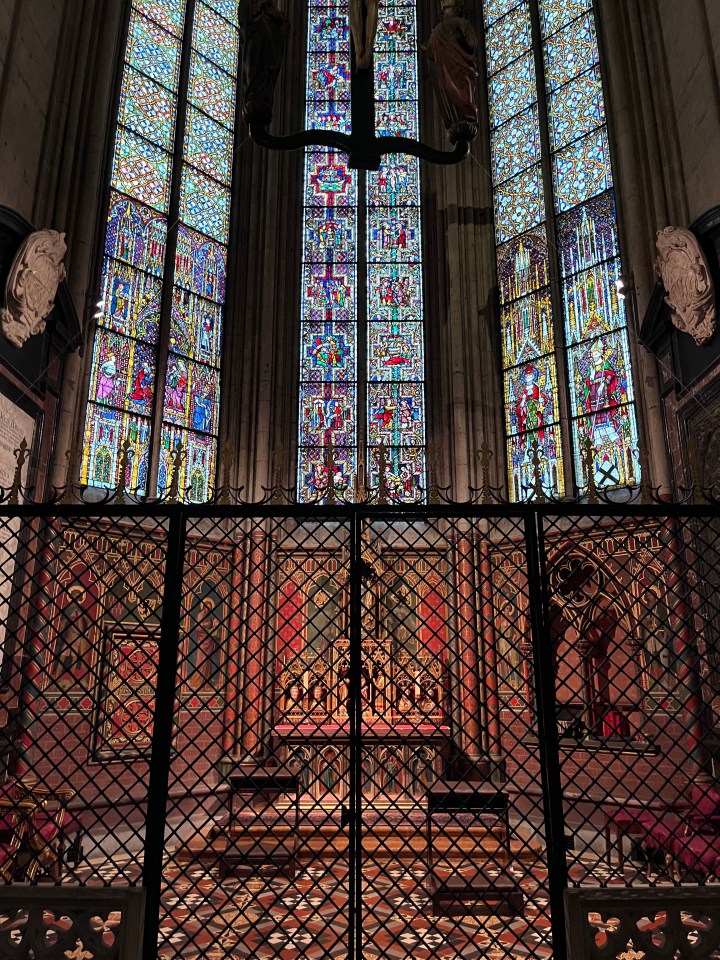
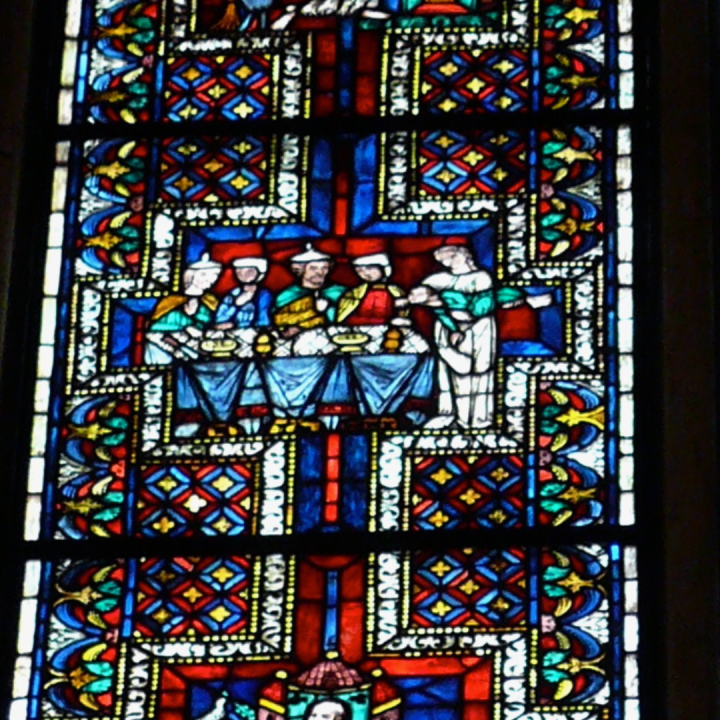
The weaning of Isaac in the Older Bible Window. All men involved are wearing so-called Jewish hats. These are wide-brimmed hats with a pointed tip. In Christian art of the Middle Ages, this was a stylistic device to depict figures, i.e. people of Jewish faith, as such. Many times as a devaluation, sometimes just to show that these people were connected to Judaism.
The Shrine of the Three Holy Kings

The Shrine shows many Jews from the Old Testament as King Solomon in a neutral way, as path makers to Christianity. But also…


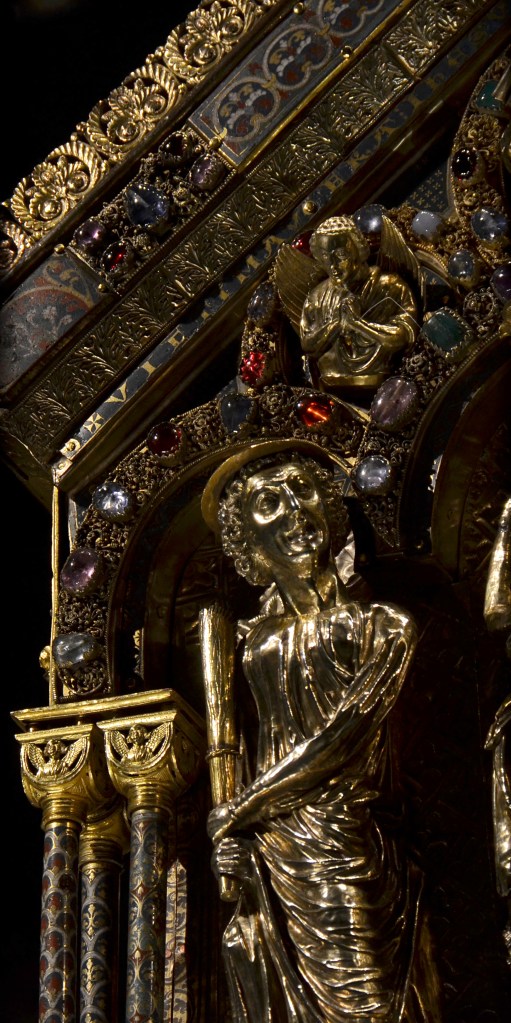
In the Passion scene, the Roman legionaries are replaced by two Jews, who beat Jesus with rods, having demonic faces. The anti-Semitic intention of the creators is clearly recognizable here.
The Jewish Privilege of 1266 in Cologne Cathedral

The Jewish Privilege of 1266 in Cologne Cathedral was a document issued by Archbishop Engelbert II von Falkenburg, granting Cologne’s Jewish community certain legal protections and rights. It reaffirmed their status as servi camerae regis (servants of the royal chamber), meaning they were under the direct protection of the archbishop. The privilege regulated taxation, burial rights, legal matters, and trade rights, offering some security against persecution. However, it also reinforced Jewish dependency on the archbishop’s authority. While providing temporary stability, such privileges remained fragile and could be revoked in times of crisis.
Don’t miss any new episode!
 The History of Cologne Podcast
outstanding! 104 2025 #86 In the Heart of the City: Women’s Convents in 13th Century Cologne fabulous
LikeLike