
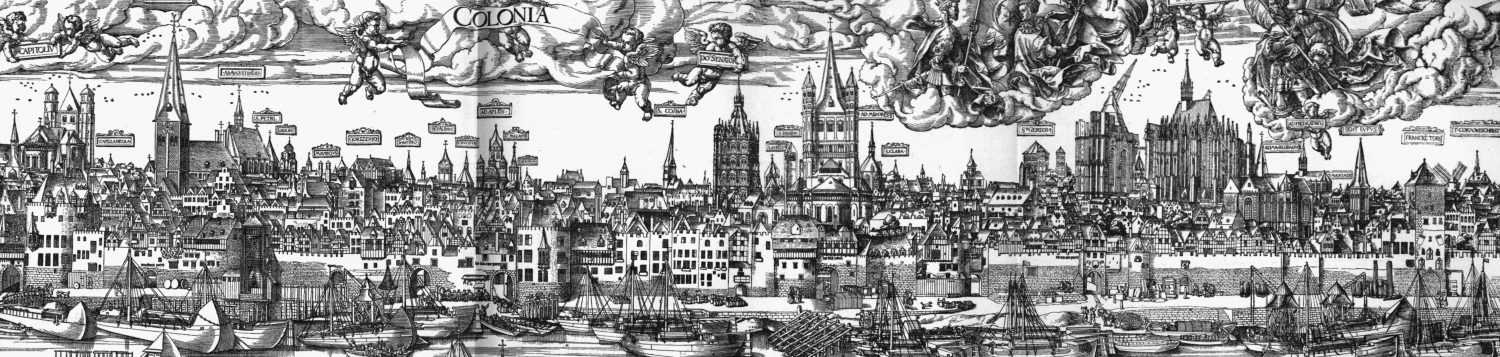

In this retrospective episode, we explore how medieval Cologne’s citizens gradually challenged the authority of their archbishops, built their own institutions, and laid the foundations for urban independence in the High Middle Ages.
Timetable
10th century
965: Death of Archbishop Bruno → connection of spiritual and secular power, foundation of archiepiscopal rule over the city.
11th century
1074: Uprising against Archbishop Anno II → first sign of urban self-confidence.
12th century
1106: Expansion of the city walls with imperial approval, against the will of the archbishop.
1179/1180: Further expansion of the city walls with imperial support.
Formation of the Richerzeche (Brotherhood of the Rich, sworn association).
Special communities (parish districts as local self-administration, defense organization, land registry records).
13th century
1215/1225: City council founded, initially prohibited and then re-established.
German throne dispute, Cologne acts as a political player, first independent foreign policy.
1259: Staple right granted, Cologne grows wealthier and becomes a major trading power on the Rhine.
1252/1257: Conflicts with the archbishop, mediation by Albertus Magnus.
Patricians vs. craftsmen, internal tensions.
1259: “Revolution from above” – archbishop takes over power in Cologne from the patrician families
1262/63: Patrician rule is reinstated by archbishop
1267: The Cologne Archbishop gets caught in battle and put in prison
Cologne’s City Expansions in the 12th century
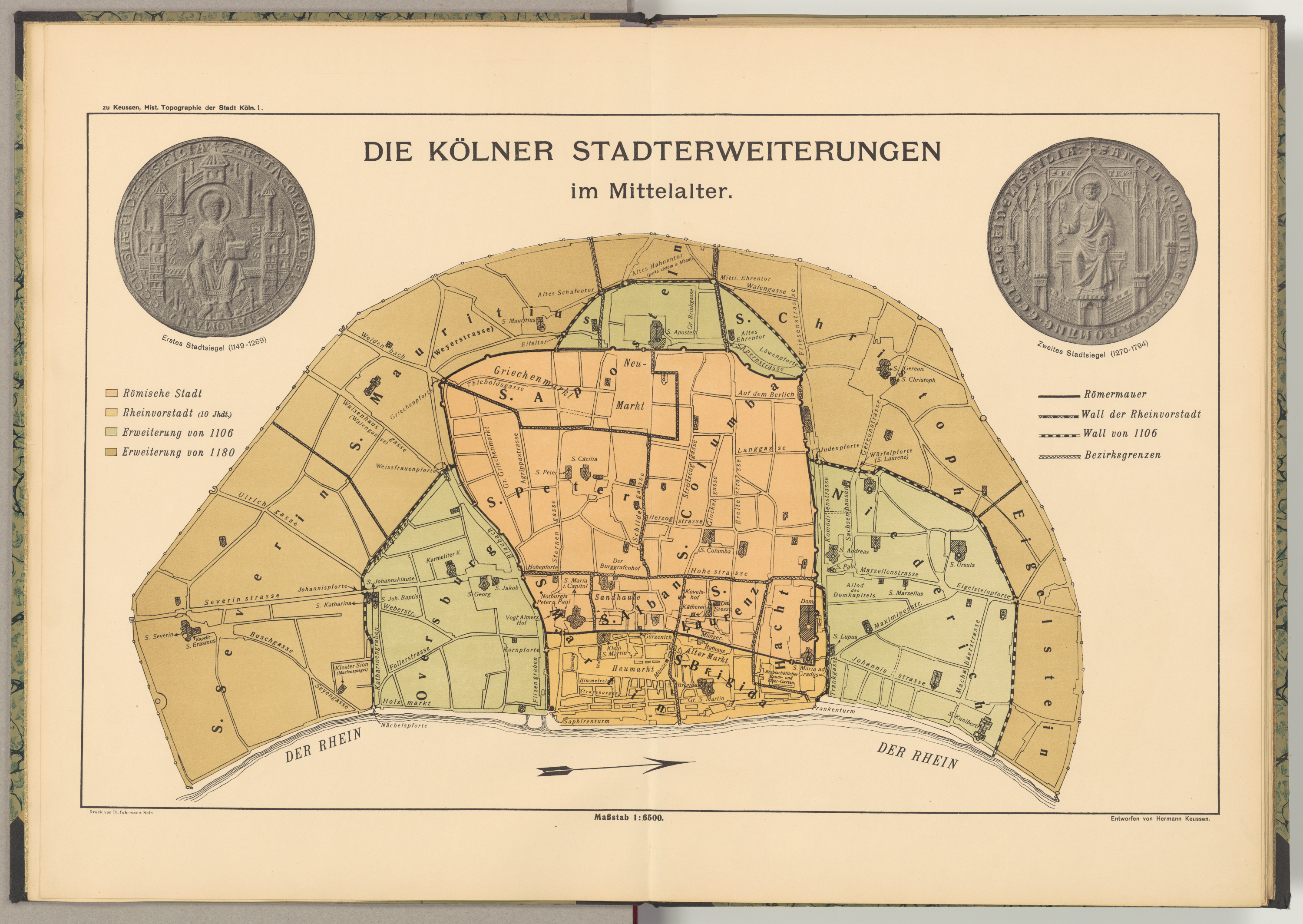
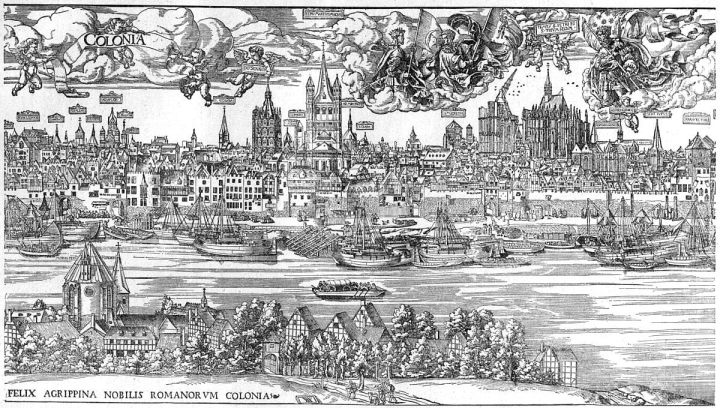
When you imagine Cologne in the year 1265, you see the largest city of medieval Germany: bustling marketplaces, merchant houses, and workshops, the Rhine crowded with ships. Yet above all stood the Archbishop – not only as spiritual shepherd but also as the city’s lord. For centuries, Cologne lived in the tension between episcopal power and the growing self-confidence of its citizens.
Citizens and Their Status
Not every inhabitant of Cologne was considered a “citizen.” Citizenship was tied to wealth and property – a privilege reserved for a minority of men. Within this citizenry, divisions were deep: while artisans and merchants shaped daily urban life, powerful patrician families such as the Overstolzen or the Weisen dominated politics and society.
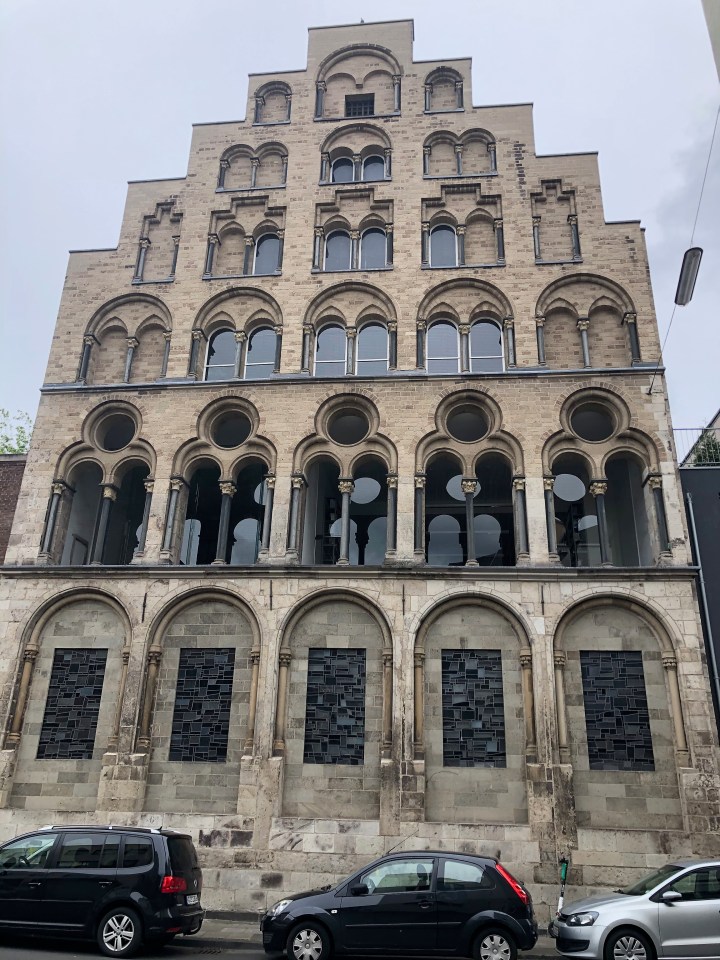
The patrician House of the Overstolzen Family in Cologne.
The Archbishop as Ruler
Since the 10th century, the Archbishop of Cologne combined spiritual and secular power, serving as judge, coin master, and supreme authority. For a long time, this arrangement benefitted both sides: the archbishop offered protection and influence in imperial politics, while Cologne’s merchants brought wealth through their far-reaching trade networks.


First Conflicts
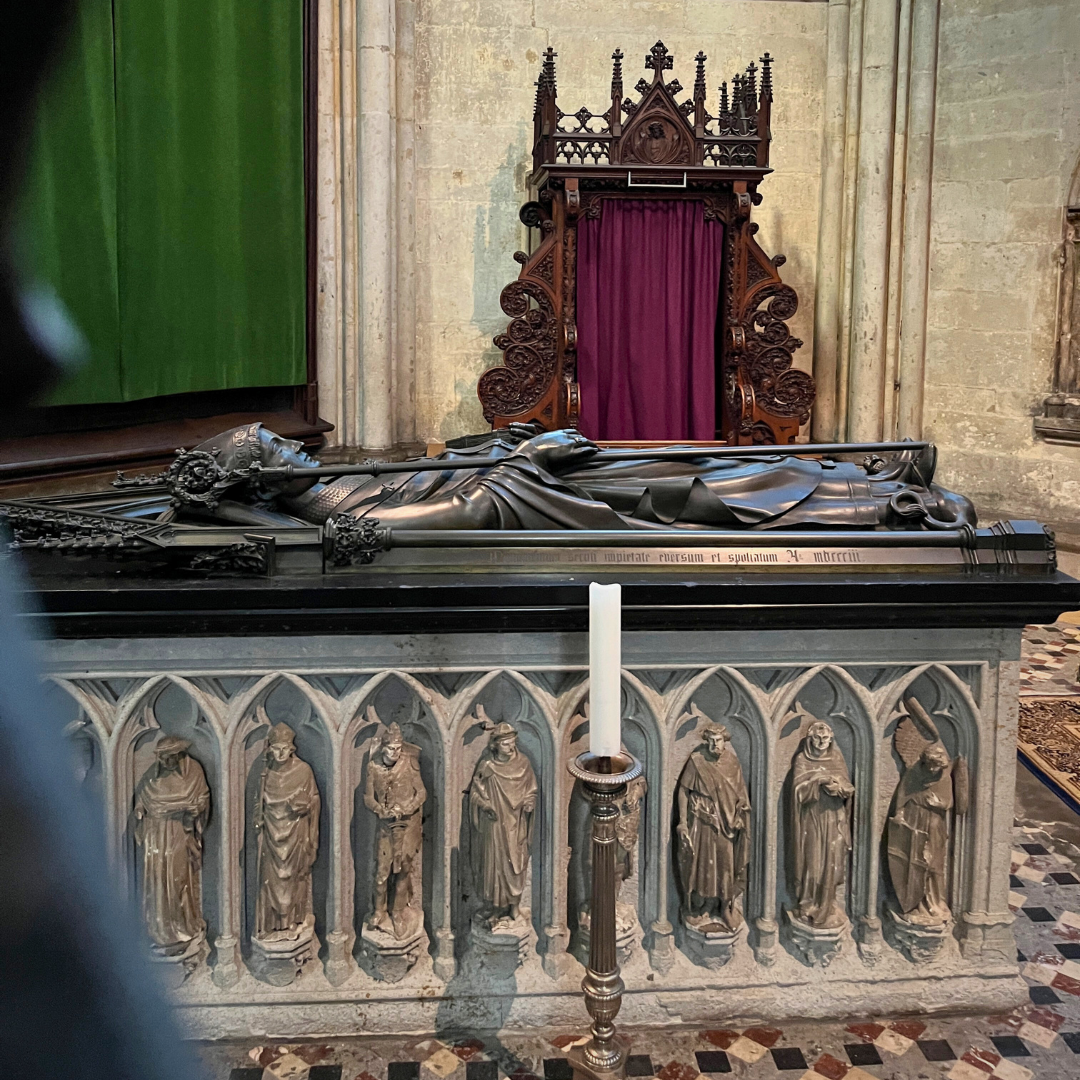
The uprising of 1074 against Archbishop Anno II revealed, for the first time, a sense of collective urban self-confidence. Though suppressed, the lesson was clear: united, the citizens could challenge their ruler. In the decades that followed, Cologne’s citizens repeatedly turned to the emperor as a higher authority, winning rights such as the expansion of the city walls – much to the displeasure of their archbishop.

The flight route of Archbisho Anno in 1074, escaping Old Cologne Cathedral at night.
New Institutions Emerge
From the 12th century onwards, Cologne saw the rise of new communal institutions:
- The Schöffenkollegium (college of magistrates) – originally sworn to the archbishop, but gradually taking on broader civic roles.
- The Richerzeche – a sworn brotherhood of wealthy citizens that acted like a semi-official city authority.
- The Sondergemeinden/wards (parish-based communities) – organizing neighborhood life, defense of the walls, and even property records.
- The Stadtrat (city council, from 1215/ and 1225 onwards) – linking local communities with the city’s elite leadership.
Together, these institutions gave Cologne’s citizens a voice – though conflicts with the archbishop and between social groups were never far away.
Sadly there are no contemporary pictures of those institutions
Wealth and Tensions
Cologne’s trade flourished, especially after the granting of the staple right in 1259, which forced passing merchants to unload and sell goods in the city. This privilege made Cologne one of the richest trading hubs of medieval Europe.
Yet prosperity also deepened divisions: patrician families tried to monopolize power, while craftsmen and artisans often felt sidelined. The result was a mixture of cooperation, rivalry, and recurring conflict – within the city and against its archiepiscopal ruler.
A City on the Brink
By the mid-13th century, Cologne stood as a wealthy, ambitious city, no longer merely an episcopal possession but not yet fully independent. Every conflict with the archbishop, every compromise with the emperor, and every new institution brought the city one step closer to autonomy.
All of this leads us to one of the greatest turning points in Cologne’s history – but that is a story for the next episode…
 The History of Cologne Podcast