
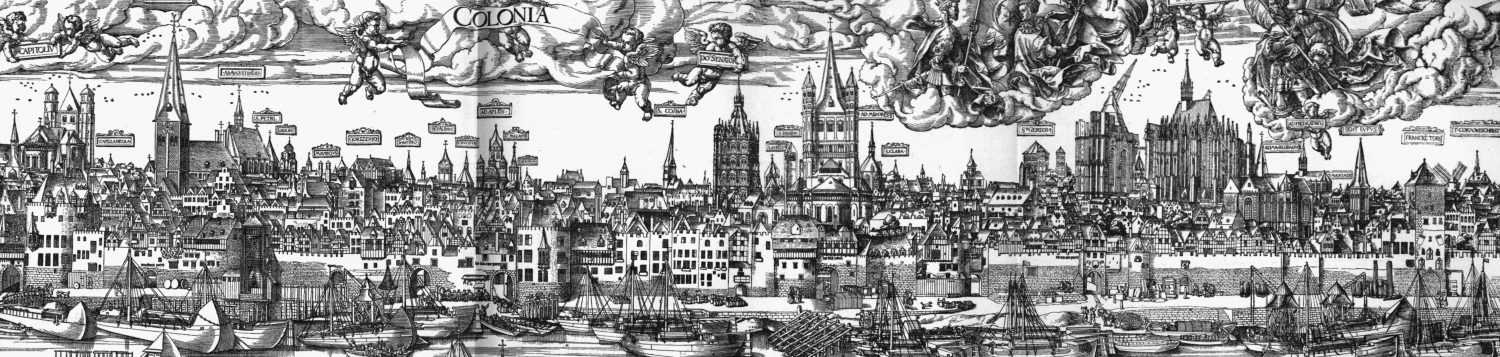
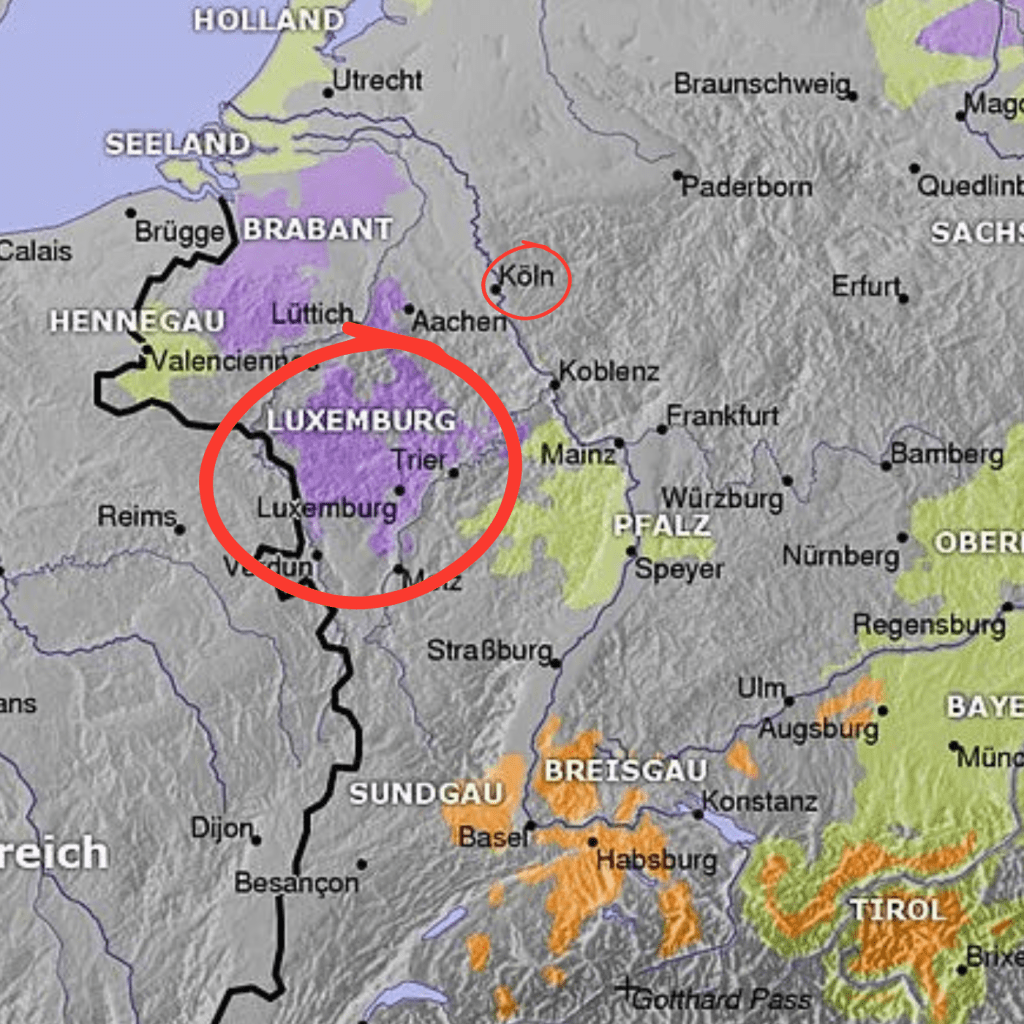
On 5 June 1288, the Battle of Worringen took place, serving as the violent climax to the Limburg War of Succession. This battle featured a “who’s who” of the north-western Holy Roman Empire and transformed the Rhineland from a chaotic mosaic of dominions into a new political reality. Rather than a tale of good versus evil, the conflict was a raw struggle for land, power, and the right to dominate the region.
The fight for the Duchy of Limburg
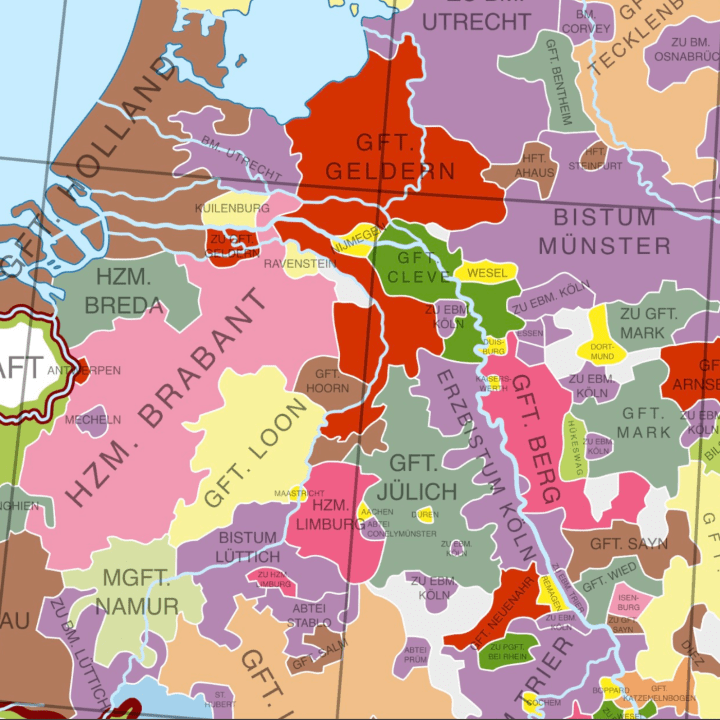
Alliance I: Luxembourg/Archbishop of Cologne/Geldern
Siegfried von Westerburg (Archbishop of Cologne)
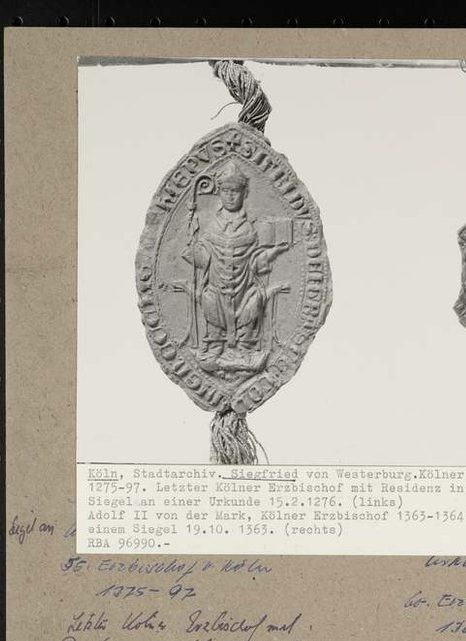
Source: Reproduktions-Nr: rba_d102695_01
Bildnachweis: Rheinisches Bildarchiv Köln, 2024
Siegfried von Westerburg, Kölner Erzbischof 1275-1297 und Adolf II von der Mark, Kölner Erzbischof 1363-1364, 1276 & 1363, Historisches Archiv der Stadt Köln, Köln.
A “nobleman through and through” and trained in war, Siegfried was a power-hungry politician aiming to create a unified territory from the Rhineland to Westphalia. However, his own citizens in Cologne resented his tolls and his “den of thieves”—the customs fortress at Worringen.
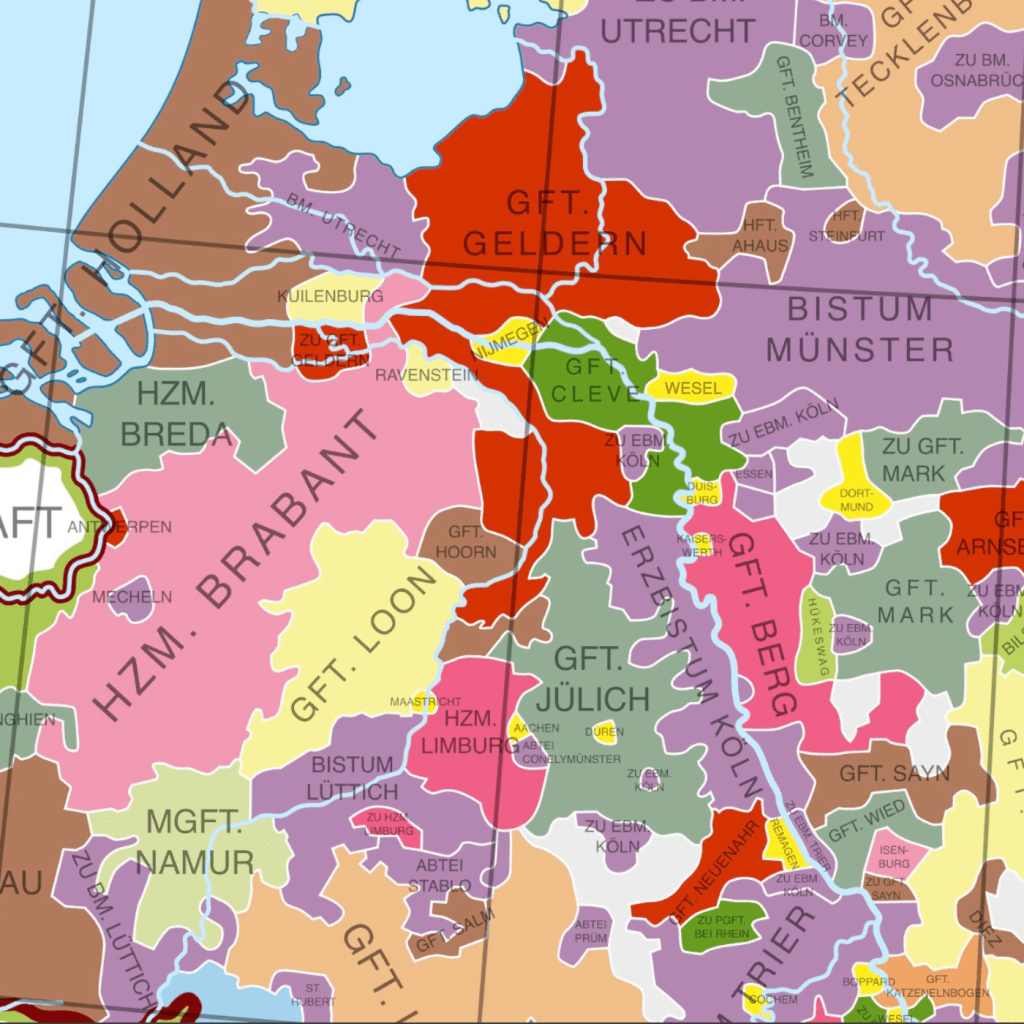
Count Rainald I of Geldern
Rainald initially claimed the Duchy of Limburg through his marriage to Irmgard, the last heir. After her death in 1283 left him without an heir and financially ruined, he sold his claim to the Luxembourgs for a staggering 40,000 Brabant marks—equivalent to over 9 tonnes of silver.
The House of Luxembourg (Henry VI and Walram)
An up-and-coming dynasty seeking to expand northwards between the Meuse and Moselle. They purchased the Limburg claim from Geldern to gain a foothold in the Rhineland, forming a strategic alliance with the Archbishop of Cologne and the Count of Geldern.
VS
Alliance 2: Berg-Brabant
Count Adolf V of Berg
Adolf V of Berg was a long-reigning rival to the Cologne Archbishop who spent 40 years consolidating his independence. Despite his own blood claim to Limburg, he sold his rights to the Duke of Brabant to secure a powerful military ally against his feudal lord, the Archbishop.
Duke John I of Brabant
John of Brabant known as the “ideal knight,” John presided over a golden age by promoting trade and allying with wealthy cities like Brussels and Antwerp. He entered the conflict out of pure opportunism, hoping to extend Brabant’s influence east all the way to the Rhine.

