In this episode, we explore the aftermath of the Battle of Worringen and the bold move by Count Adolf V of Berg that changed the Rhineland forever. Discover how a power vacuum—created by the imprisonment of the Archbishop of Cologne—led to the birth of Düsseldorf as a town on August 14, 1288.
We dive into the tactical errors and turning points of one of the Middle Ages’ greatest knightly battles, where the forces of Brabant, Berg, and the citizens of Cologne triumphed over the Archbishop’s coalition. The discussion covers the long-term consequences of this victory, including the de facto independence of Cologne, the rise of the House of Berg as a sovereign power, and how these events shaped the enduring rivalry between Cologne and Düsseldorf.
The Power Vacuum of 1288
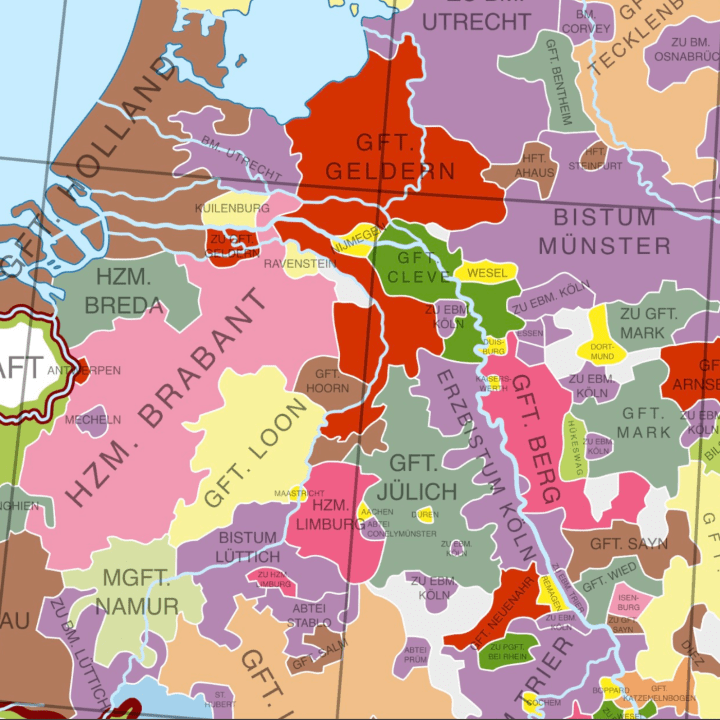
The birth of Düsseldorf wasn’t a peaceful urban planning project; it was a calculated power move. Just two months prior, the Archbishop of Cologne, Siegfried von Westerburg, had been decisively defeated and taken prisoner at the Battle of Worringen.
While the Archbishop sat powerless in a dungeon in Solingen, count Adolf V of Berg granted town rights to Düsseldorf. This move allowed the House of Berg to establish a strategic foothold right on the Rhine, directly challenging the Archbishop’s ability to levy taxes in the Rhineland.
Why the Archbishop Lost
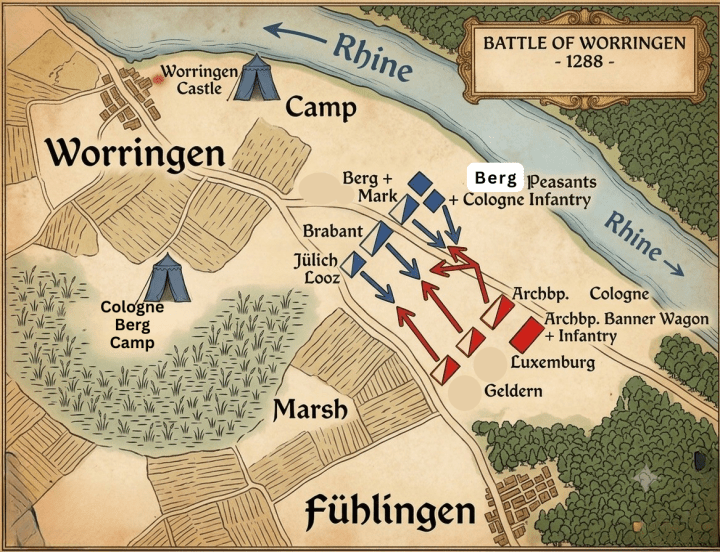
Despite having more knights and troops, the Archbishop’s coalition crumbled due to fatal tactical errors:
- The Luxembourg Collision: Early in the battle, the Archbishop pivoted his lines prematurely, accidentally crashing into his own allies, the Luxembourgs.
- The Distraction of Loot: A large portion of the troops from Guelders abandoned the front lines to plunder what they thought was an unguarded camp, allowing the opposition to regroup and strike the center.
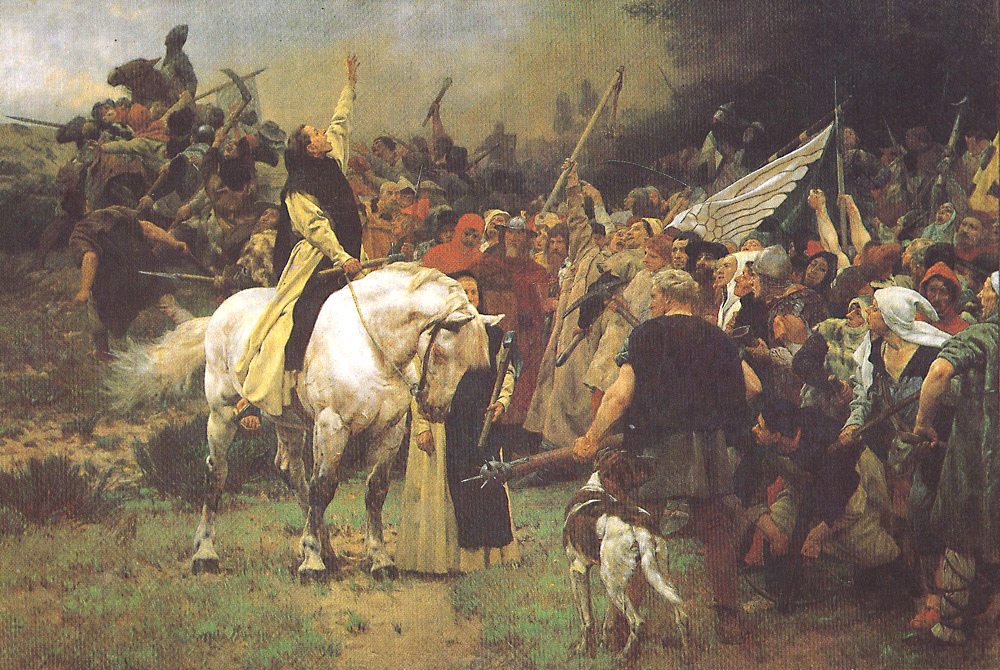
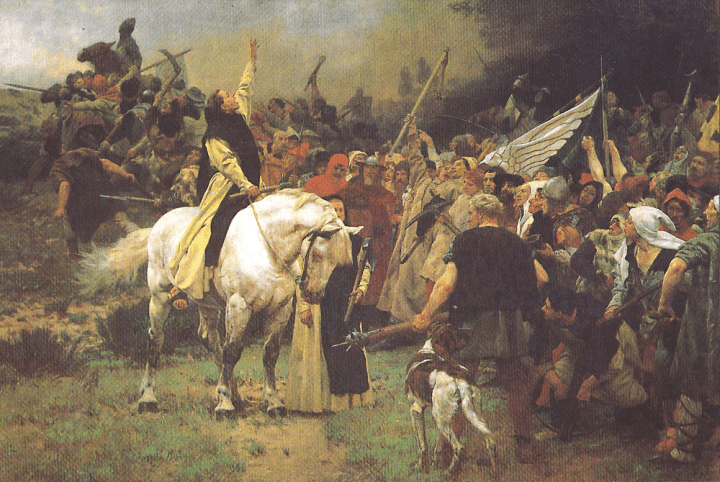
- The Bergisch Peasant Charge: Often romanticized in local lore, the late-stage attack by Cologne citizens and Bergisch peasants helped seal a victory that was already tilting toward the House of Berg and Brabant.
The Winners and the “Island” of Cologne
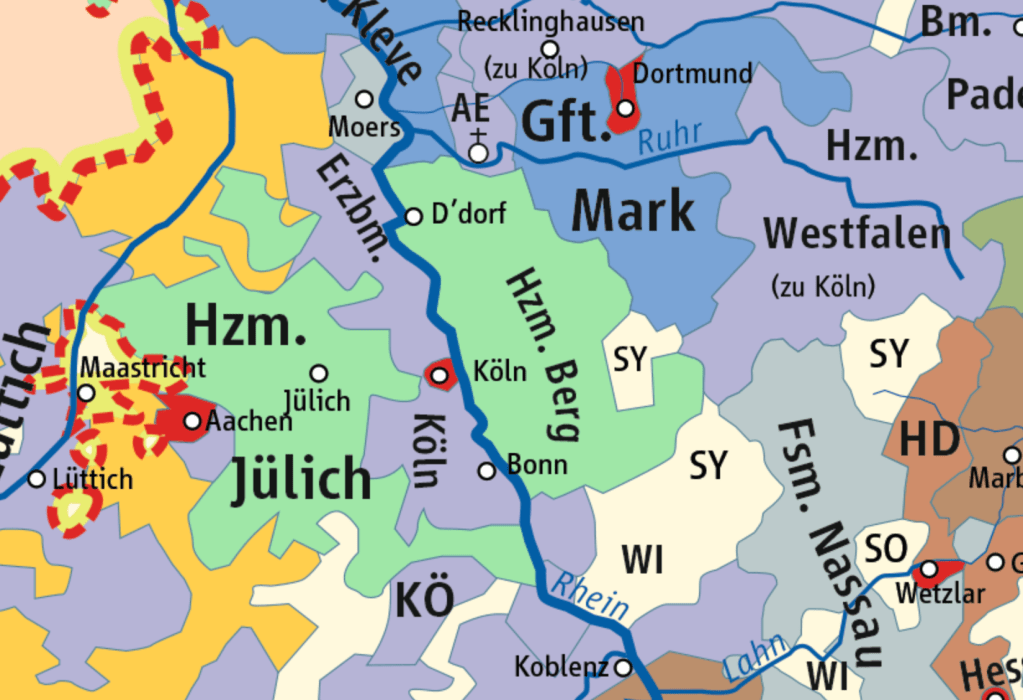
The fallout of the battle reshaped the map of Europe:
- The House of Berg: Gained total independence, the right to mint their own coins, and eventually moved their capital to Düsseldorf in 1380
- Brabant: This victory paved the way for the rise of Burgundy, a power that would eventually rival France and the Holy Roman Empire.
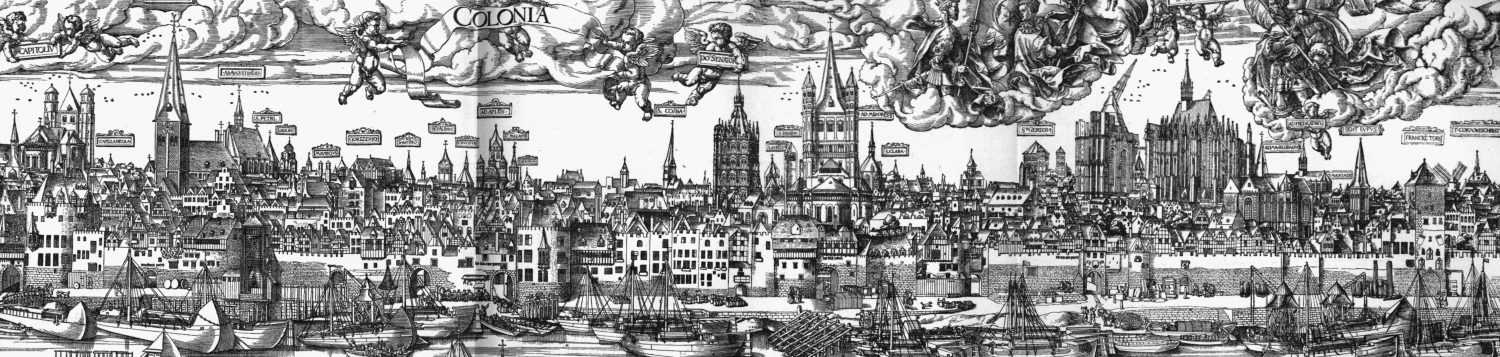
- Cologne: On paper, the city won its freedom. They even used stones from the destroyed Worringen castle to reinforce their city walls. However, the victory turned Cologne into a territorial island. Surrounded by the Archbishop’s secular lands, the city’s boundaries remained frozen for nearly 700 years, preventing it from expanding like its neighbors.
A Rivalry Carved in Bronze
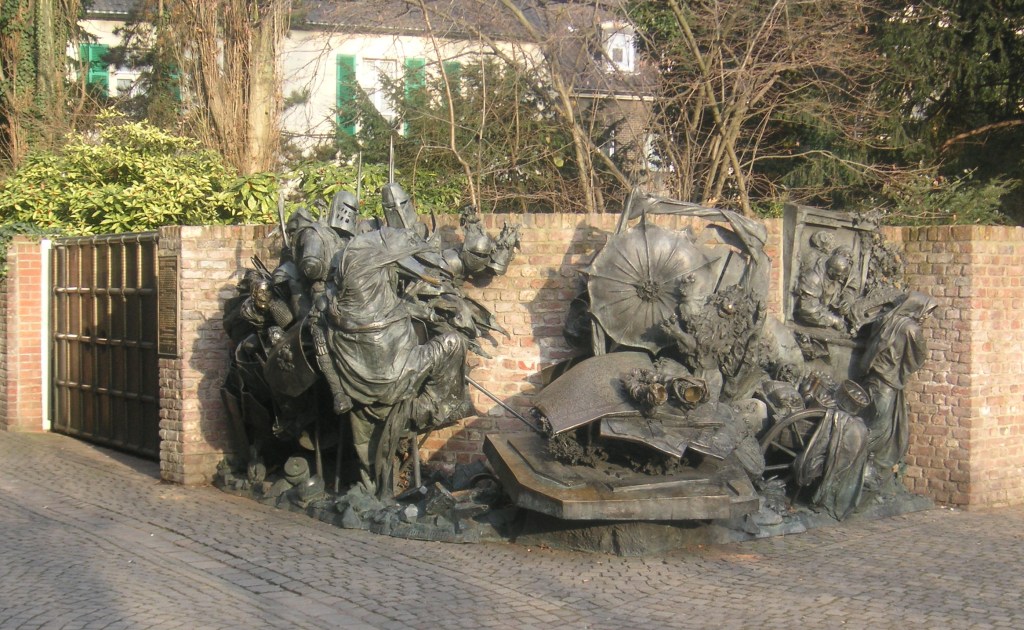
The friction between Cologne and Düsseldorf didn’t end in the Middle Ages. From 19th-century paintings that scrubbed out “the other side’s” contributions to the Stadterhebungsdenkmal (City Elevation Monument) erected in 1988, the memory of 1288 continues to define the identity of these two Rhine powerhouses